Most discussion about a facade stops at the day the scaffold comes down. Yet the building stands for decades, and the facade must be cleaned, inspected and sometimes repaired throughout that time. Whether that is easy or painful is largely settled during design. A facade that cannot be reached safely will be cleaned badly or not at all, and small defects will grow because nobody can see them. This article sets out what to plan for.
Start with how people will reach it
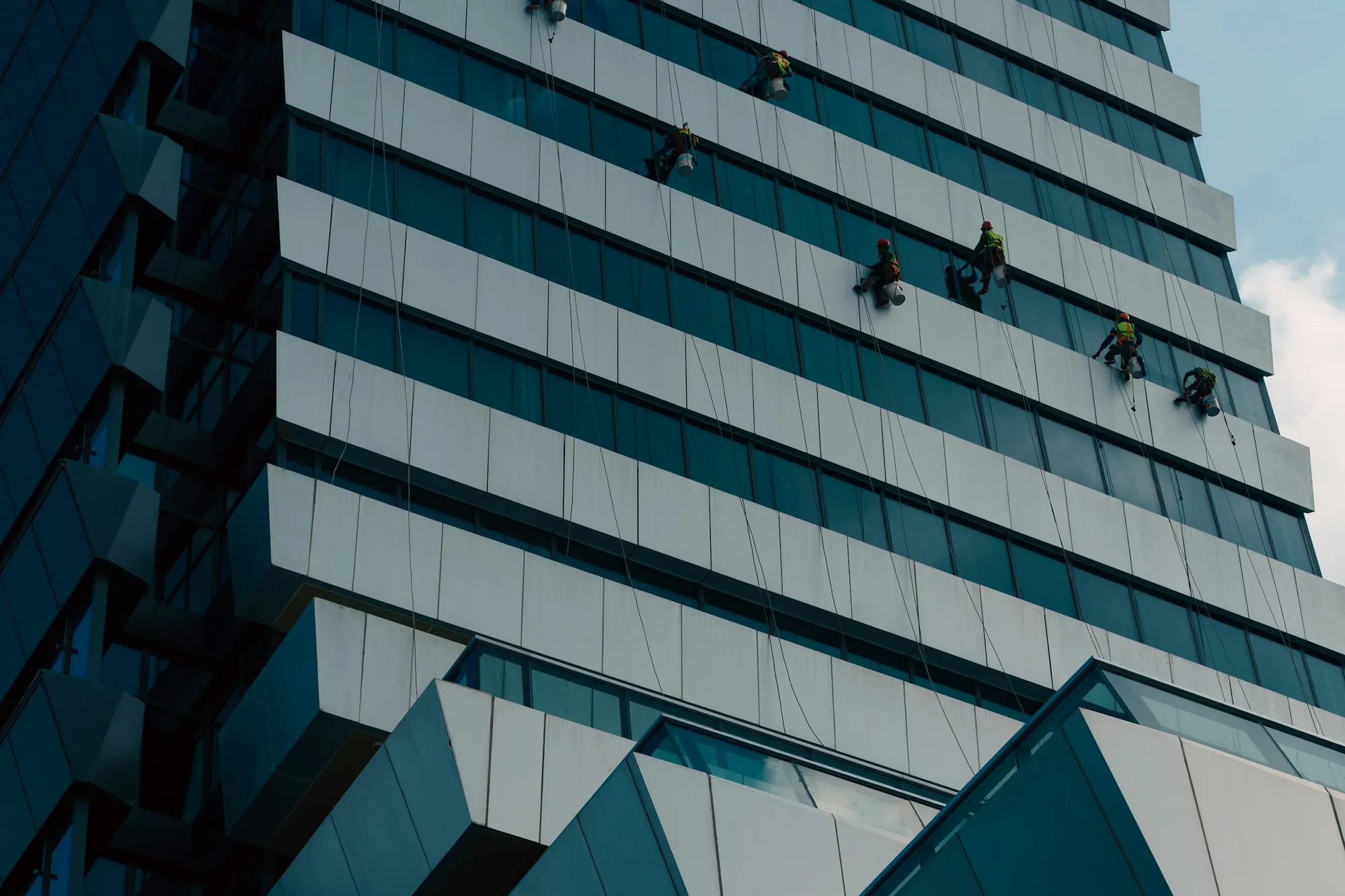
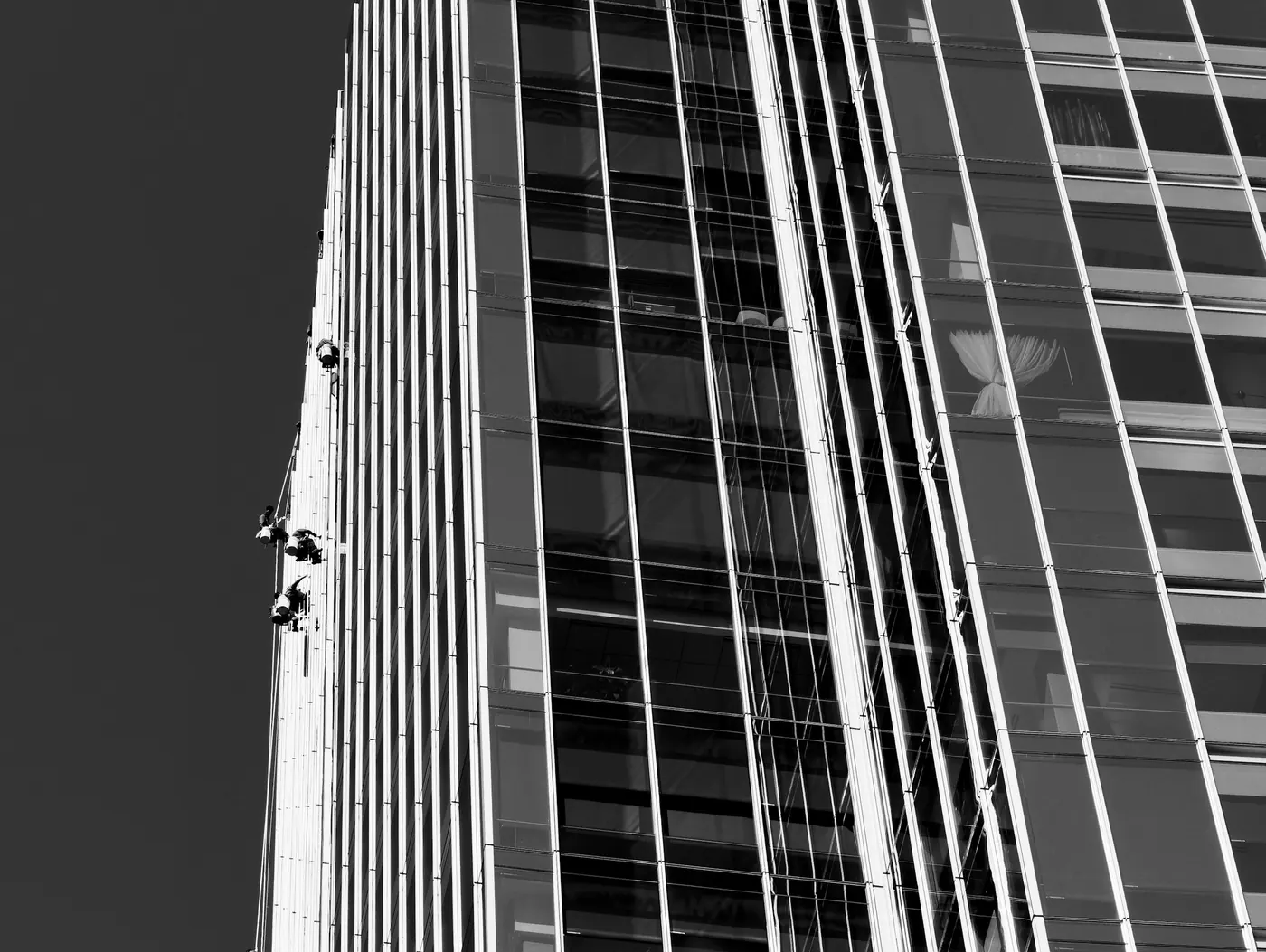
The first question is practical: how will a person get to every square metre of this facade? The answer might be a roof-mounted cradle, rope access, a mobile platform from the ground, or reach from terraces and balconies. Each method places demands on the building: anchor points, rails, a parapet that can take loads, or clear ground for equipment. Those demands must be built in, because retrofitting them is expensive and sometimes impossible.
Write the access method into the design brief. It should say which method is intended for which zone, and the facade details should be drawn to suit it. A projecting fin or a deep reveal that blocks a cradle's path may look elegant on a drawing and cost a great deal in cleaning over the years. Decide early which compromises are acceptable.
Different parts of the same building may need different methods. A podium level can often be reached from the ground, while a tower needs a permanent system, and a courtyard facade may only be reachable from inside. Mapping each elevation to its method on a single sheet shows the gaps early, before the details are fixed. It also makes it obvious which areas will be expensive to reach and may deserve a more durable finish.
Shape and detail decide cleaning effort
Cleaning is easiest on smooth, continuous faces that can be wiped or rinsed in one pass. Every projection, ledge and recess adds time and collects dirt. Horizontal surfaces hold dust and bird droppings, and deep pockets are almost impossible to reach with a pole. Where a design includes such features, ask who will clean them, with what, and how often.
Elements such as louvers and sun-shading fins are good examples. They are useful for performance, yet they have many small surfaces and edges. Our article on louvers and sun-shading fins describes how they work, and from a maintenance view you should check spacing, removable blades and whether a cleaner can reach between them.
Choose finishes with the cleaning regime in mind
The finish on metal and glass affects how easily dirt comes off and which cleaning products are safe. Some coatings tolerate gentle detergents but not abrasive pads, while others have specific limits for solvents. Using the wrong product can dull a surface and may void a warranty. The cleaning instructions should come from the finish supplier, and they should be included in the building's handover manual.
Consider also how the finish shows dirt. A dark, glossy surface displays streaks and water marks, while a lighter textured one may hide them. There is no right answer, but the owner should know what they will see between cleans. Our guide to anodised, powder coated or PVDF finishes gives a starting point for comparing them.
Joints, seals and parts that wear
Not everything on a facade lasts as long as the frame. Sealants and gaskets age, and a sealant joint may need to be inspected, repaired or replaced during the building's life. If a joint is behind a cover or sits at a height that cannot be reached, replacing it will be far more costly. Design joints so that the sealant can be reached and renewed without removing large parts of the facade.
Our article on sealants and gaskets in facades describes what these materials do. From a maintenance viewpoint, ask how long the supplier expects each to serve, what signs of wear to watch for, and what the renewal method is. Moving parts such as hinges, locks, operable vents and drainage openings need the same thought.
Plan for replacing a panel
Glass breaks, and sometimes a panel is damaged by impact or a hidden flaw. The facade should allow replacement without taking down large areas. In a stick-built curtain wall, a single unit may be removed by taking off the outer pressure plate and lifting the glass out. In other systems, replacement needs a hoist from inside or the removal of neighbouring units.
Do not leave this to chance. Ask for a replacement method statement during design, and confirm how glass would be lifted, which equipment would be needed and where it would be stored. Agree whether spare panels will be kept on site, because special coated or laminated glass may have a long lead time. A spare panel in storage can turn a months-long problem into a manageable week.
Safety of the people doing the work
Maintenance staff work at height, often in wind, using equipment that depends on fixing points built into the building. Those points must be designed, tested and recorded, not assumed. If a roof edge cannot take a cradle track, or a parapet is too low for a safe working position, no operating procedure will fully make up for it.
Involve the people who will do the work. A facility manager or a cleaning contractor can often point out in ten minutes what a drawing review misses: a door that opens onto a cradle path, a drain that floods a landing, or a ladder with no safe base. A short design review with them, held before details are frozen, is one of the cheapest forms of risk reduction on a project.
Where parts are heavy, such as large glass units or ventilated panels, plan the lifting equipment and the temporary support needed. A panel that takes four people to hold in position should not depend on informal improvisation. Write the method down and rehearse it where possible.
Inspection is part of maintenance
Cleaning and inspection are best done together, since the person on the cradle is already close to the surface. Give them something to look for. A simple checklist of gaskets, joints, fixings that can be seen, drainage openings and finish condition makes the inspection consistent from year to year. Our facade maintenance checklist offers a ready starting point.
Keep photographs and notes of what is found. A pattern, such as repeated staining below one detail or gasket movement on one elevation, points to a design or installation cause. Without records, each visit is treated as a fresh event and the underlying issue goes unnoticed. The building envelope is a system, and trends only appear over time.
Cost over the whole life of the building
Maintenance cost is easy to ignore when the capital budget is tight. A detail that saves money to build can cost more to clean every year, and the owner pays that cost for decades. A fair comparison between two facade options should include the access method, the cleaning frequency and the expected renewal of joints and finishes, not only the supply and installation price.
This is where value engineering needs care. Our article on value engineering a facade without losing performance describes how savings can shift cost to a later stage. Removing a cleaning anchor or an access hatch may look harmless in the drawings, yet it can make routine work slower, riskier and more expensive for the building's whole life.
What the handover pack should contain
A good handover pack gives the owner what they need to keep the facade working. It should be written for a facility manager, not an engineer, and it should be specific to the building. Generic brochures do not help when a panel breaks at night or a cleaner asks which detergent to use.
- A plan showing which access method serves each zone, with anchor and track locations.
- Cleaning instructions from the finish and glass suppliers, including products to avoid.
- A schedule of inspection points with a simple checklist.
- Replacement method statements for glass, sealants and operable parts.
- Spare parts and panels, with supplier contacts and lead times.
- Warranty conditions and the maintenance routines they depend on.
Treat these as drawings and documents to be reviewed before handover, in the same way as the structural details. If a method cannot be explained in the pack, it probably has not been properly thought through.
General guidance for orientation, not a specification. Applicable standards, values and details are confirmed per project with the facade consultant.