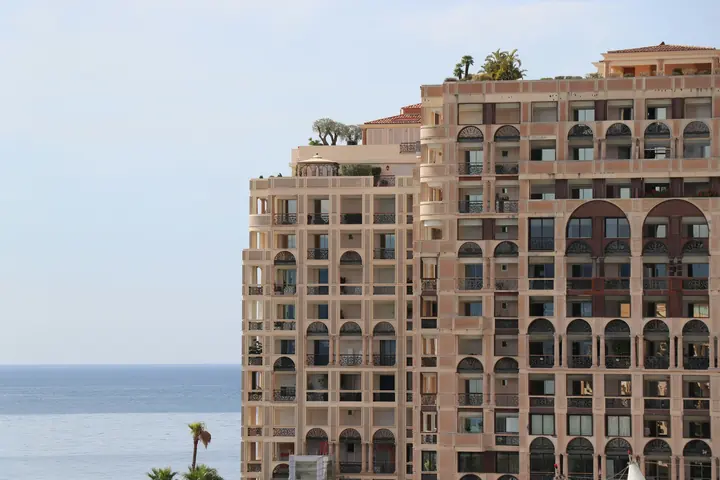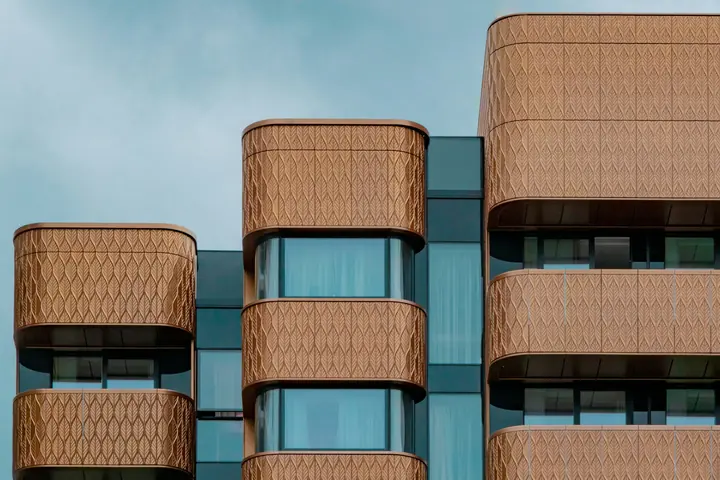
A sample panel looks perfect on the table. Then the first delivery arrives, and half the panels look slightly warmer than the rest. Or the north elevation looks different from the south, though every panel came from the same order. Colour difference is among the most common complaints on aluminium facades, and most of it can be controlled by decisions made well before fabrication.
This article explains why colour varies, what tends to be within normal range, and how to set up a project so that it is judged fairly and consistently.
Why colour varies at all
Aluminium is not painted like a wall. Parts are finished in batches, in a factory process, and each batch has its own conditions. Small differences in the metal, the cleaning and pre-treatment, the coating, the thickness and the curing all affect how a colour looks.
Different parts also take the finish differently. A flat sheet, a deep extrusion and a folded cassette have different surfaces and edges, and they may be finished on different lines. Even when each part is within its own tolerance, the combined look on a wall can show a difference.
Perfect sameness is not a realistic promise from any finishing process. What a project can do is agree what range is acceptable and how it will be checked.
Finish type changes the risk
The finish you choose shapes the match problem. Anodising grows a layer from the metal itself, so the result depends on the alloy and the process as well as the dye, and extrusions from different lots can show slight shifts. Many specifiers treat anodised variation as part of the character of the material.
Powder coating applies a coloured layer that is then cured, which generally gives a more controllable colour, but gloss, texture and cure can still differ. PVDF coating is a liquid-applied system often chosen for exterior durability, and metallic colours in particular are sensitive to how they are applied. For the broader comparison, see anodised, powder-coated or PVDF.
Metallic and pearl colours are the hardest to match, because the effect depends on the direction of the metallic flakes. Solid colours are more forgiving. If the design allows, a simpler colour reduces the risk.
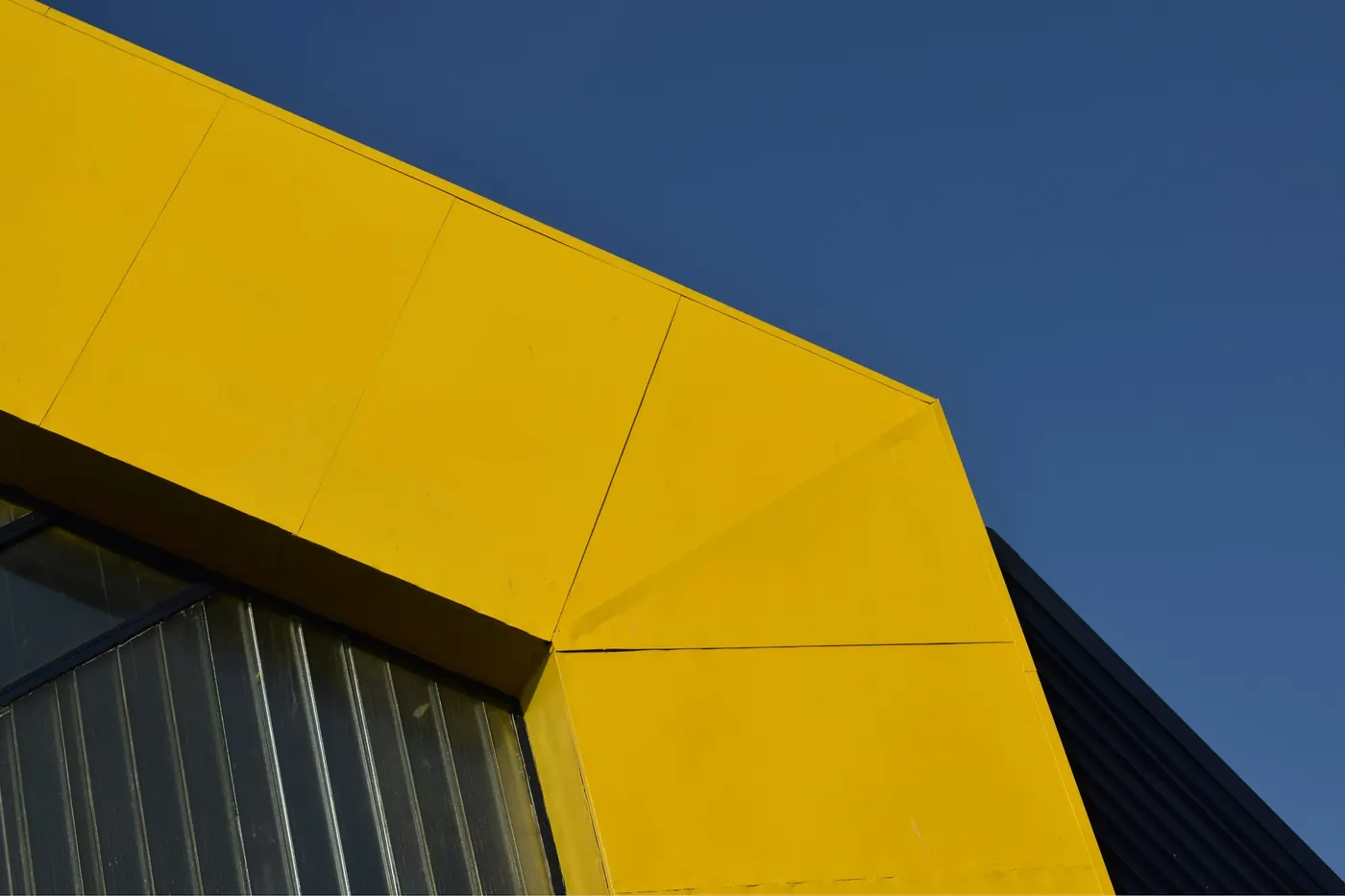
The same colour reads differently on each elevation
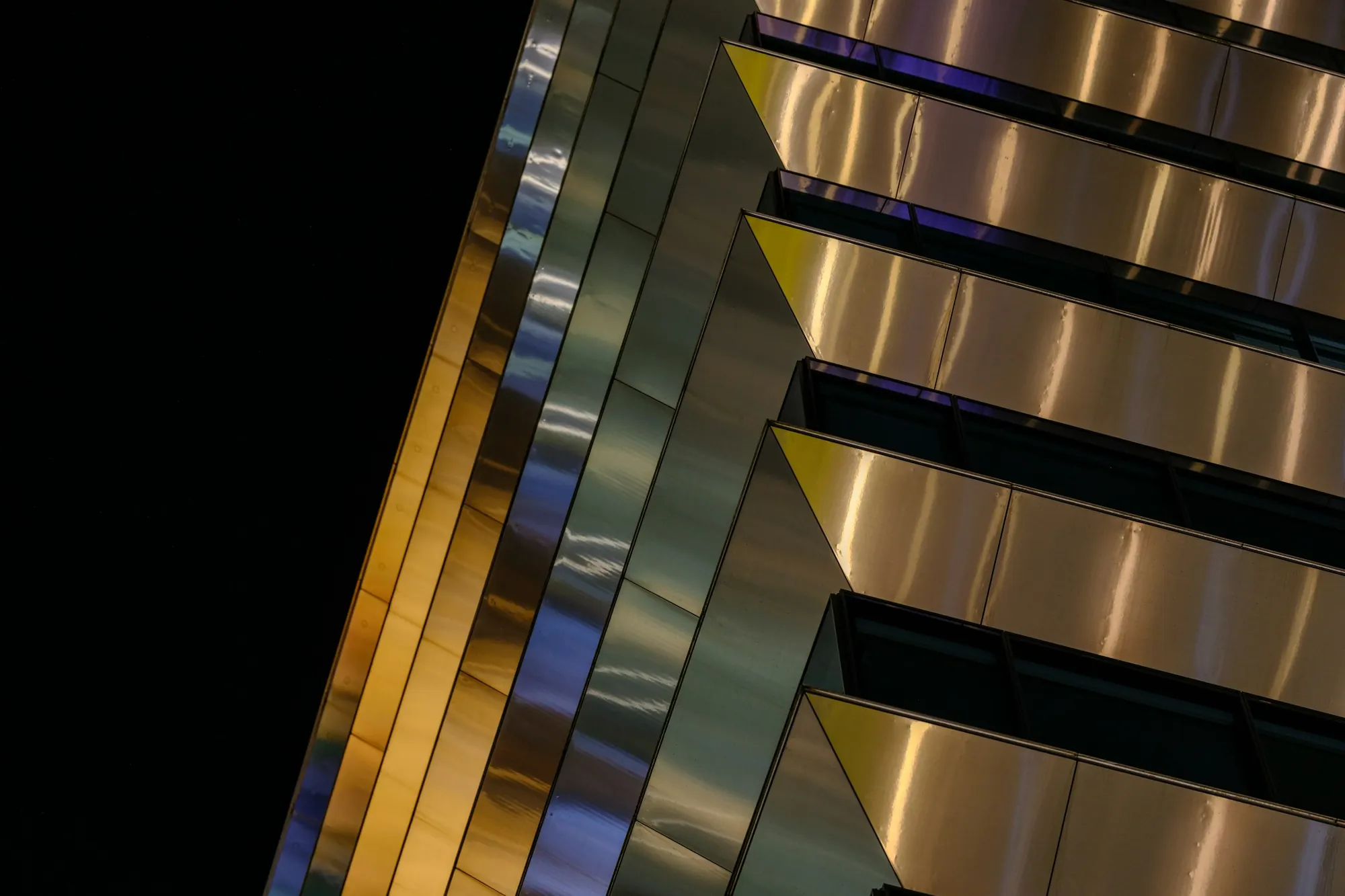
Even a perfectly consistent batch will not look identical everywhere. A panel in full sun, one in shade, and one seen at a steep angle can read differently. Gloss makes this stronger, because a glossier surface reflects the sky and neighbouring buildings more.
Orientation also changes how the surface ages. A sun-exposed face weathers differently from a sheltered one, and over years the difference can grow. Coastal or polluted air adds to it, as covered in corrosion and coastal exposure.
Because of this, judge samples in the position they will have on the building: vertical, outdoors, at the angles people will see them, and in more than one kind of light.
Fix the reference before production
The most useful step is a single approved reference. Agree a physical sample, signed and dated by the architect and the supplier, kept as the standard against which deliveries are judged. A verbal description or a colour code alone leaves too much open.
Ask for the sample to be made on the same material and process as production, not a convenient test coupon. A sample on a different alloy or thickness may not represent the real result.
Where possible, also agree a range: an upper and lower sample showing the limits of what is acceptable. Panels between those limits pass. Panels outside them are reviewed. This turns an argument into a comparison.
Keep related parts together
Many mismatches are not about the first delivery. They appear when a replacement panel or a later phase is finished weeks after the original. Plan for this early.
- Finish all parts that meet at a visible joint from the same batch where practical.
- Keep frames, caps and adjacent cladding in the same finishing run when they will be seen side by side.
- Order a small allowance of spare parts with the first batch and store them for later repairs.
- Record the batch number of each delivery against its elevation and floor.
- Avoid mixing finishes on one elevation unless a contrast is intended.
Different parts of the same facade, such as curtain wall framing and cladding panels, often come from different suppliers. See how to compare cladding materials and make the finish requirement the same in each package, with the same reference sample.
Judging colour, and mixed materials
Colour can be measured with an instrument, but the building is viewed by people. A specification can use both: an instrument reading to compare against the reference, and a visual check under defined conditions. Define those conditions in the contract: the light, the distance, the angle and who decides.
Inspect at the factory before shipping, not only on site. A panel rejected before it leaves the factory costs far less than one removed from an installed elevation. Add a hold point to the quality plan: the first production panels are approved against the reference before the rest are made.
A mock-up helps greatly. It lets the design team look at the finish with the real glass, joints and neighbours around it, in the light of the actual site.
A facade rarely uses one material. Aluminium framing sits beside coated cladding panels, glass, stone and sealant lines, and each has its own colour behaviour. Matching the aluminium to the aluminium is only half the job. The eye also compares it with everything around it.
Gloss is the quiet culprit. Two parts in the same colour but with different gloss levels will look different the moment light strikes them at an angle. State the gloss level as clearly as the colour, and check it on the sample and in the delivered parts.
Sealant and gasket colour also matters at joints. A black gasket against a bronze frame looks different from a grey one. Agree these accessories on the same sample board as the metal finish, so the whole joint is approved together.
Where the finish type differs between parts, for example anodised framing and coated cladding, it is better to treat the contrast as a design decision and show it on the sample board than to expect a match the processes cannot deliver.
Handling, cleaning and mismatches
Some apparent colour difference comes after production. Scratches, adhesive residue from protective film left on too long, cement splash and the wrong cleaning agent all change how a surface looks. Follow the finisher's guidance on protection and cleaning, and keep protective film for as long as the sequence allows.
Over time, a regular clean keeps the finish looking consistent, and a plan for it belongs in the maintenance manual. See designing a facade you can clean and maintain and the maintenance checklist.
Even with good control, a difference may show up. Photograph it in the light where it is most visible, note the batch and location, and compare it against the approved reference and the agreed range before raising a claim. This keeps the discussion factual.
Check whether the cause is the finish or something else, such as dirt, film residue or a different surface texture. If the panel is truly outside the range, the supplier should propose a remedy, which may be re-finishing, replacing the part or regrouping panels so that the difference is spread out of sight. Agree the process in the contract before it is needed.
What to write into the specification
Name the finish type and the performance class expected, the colour reference, the process, and the approved sample. State how batches are controlled, how colour is checked, and what happens when a panel falls outside the agreed range. Say who holds the reference sample and how replacement parts will be matched later.
Link the finish to the warranty. A finish warranty is only useful if it states what it covers, how colour change is judged, and what conditions of cleaning and exposure apply. The warranty and defect liability article covers the questions to ask.
Consistent colour is the result of a clear reference, careful batching and fair judging. It is much easier to agree these things before the first panel is made than to argue about them over an installed wall.
General guidance for orientation, not a specification. Applicable standards, values and details are confirmed per project with the facade consultant.