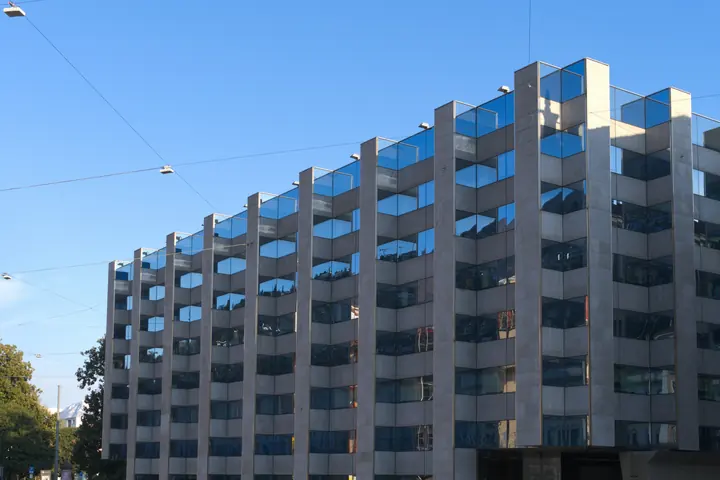
Look at a glass tower and you will usually see bands: transparent glass where the floors are, then a darker, opaque strip at each slab edge. That strip is the spandrel. It is easy to treat it as a minor item that simply needs to be the same colour as the windows. In practice it is one of the busiest zones in the whole curtain wall, because it has to hide a lot while looking like it hides nothing.
This article explains what sits behind that opaque band, the common ways of building it, and the points an architect or developer should settle before the order is placed.
What the spandrel zone has to hide
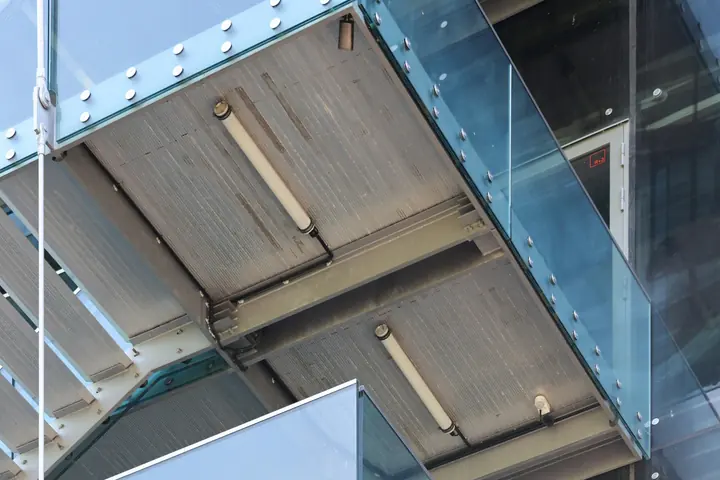
Behind the opaque band sits the slab edge, the anchors that hold the curtain wall to the building, the fire-stopping at the floor line, and often a services or ceiling void. None of that should be visible from outside, and none of it should be exposed to the weather. The spandrel panel is the skin that covers all of it.
It also has jobs beyond hiding things. It carries insulation so the slab edge does not become a cold or hot bridge. It keeps rain out, and it has to sit in the same framing grid as the vision glass so that the mullions and transoms read as one system. Several trades touch this zone, so it deserves its own detail and its own sample, not a line in the glass schedule.
Two common builds: single glass and shadow box
The simplest build is a single pane of glass with an opaque coating or ceramic frit on one face, fixed in the frame like any other glass. The coating gives colour and hides what is behind. A separate insulated back pan or board is usually fitted behind it, with a gap, so the assembly can resist heat and keep a stable temperature.
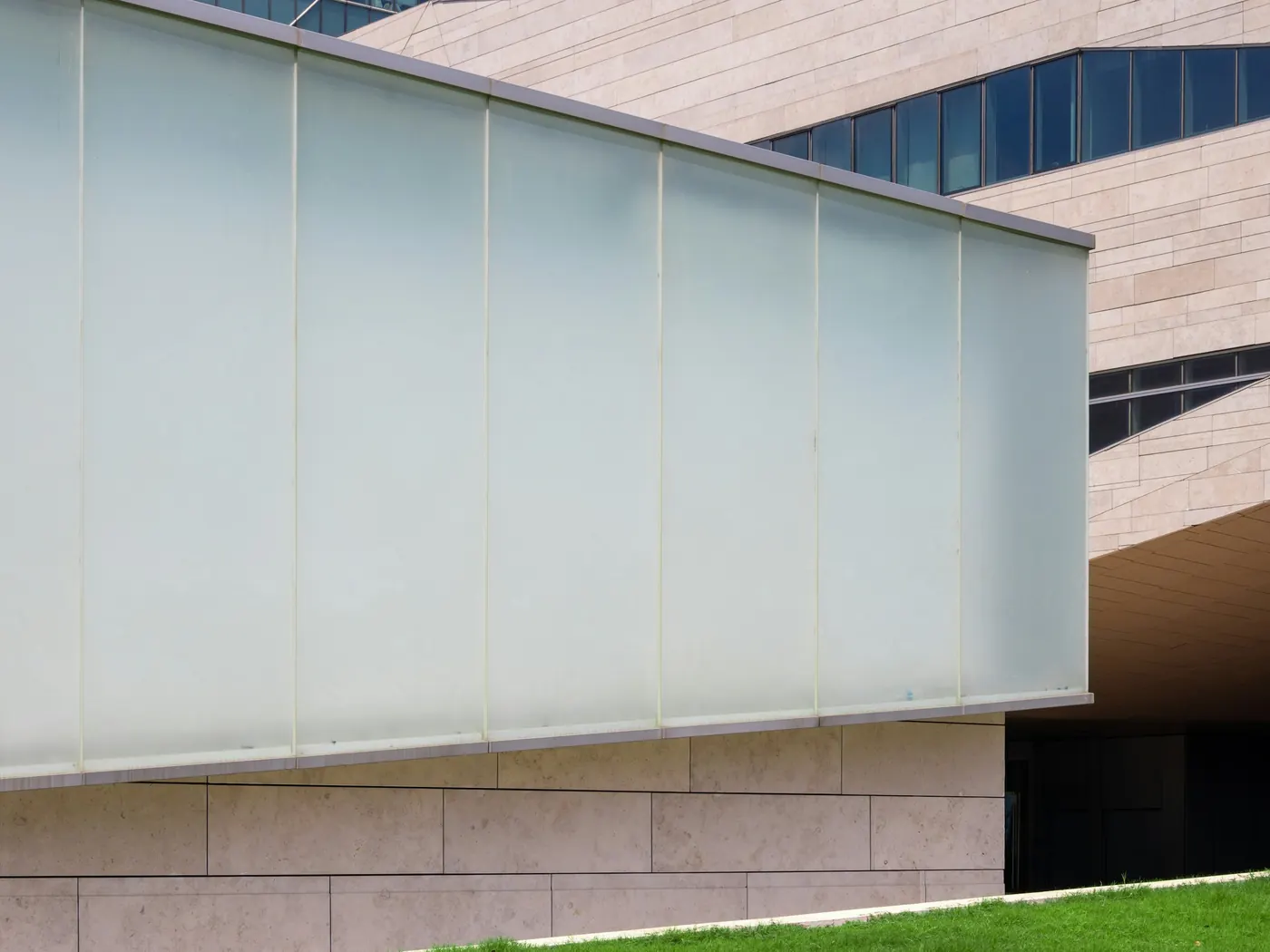
A shadow box is a deeper version of the same idea. Clear or lightly tinted glass faces outward, there is an air space, and an insulated metal pan sits behind. Because you look through the glass to a surface set back from it, the band picks up reflections and a sense of depth that a flat coated face does not. Many designers choose a shadow box when they want the opaque zone to feel close to the vision glass.
Why the colour never quite matches
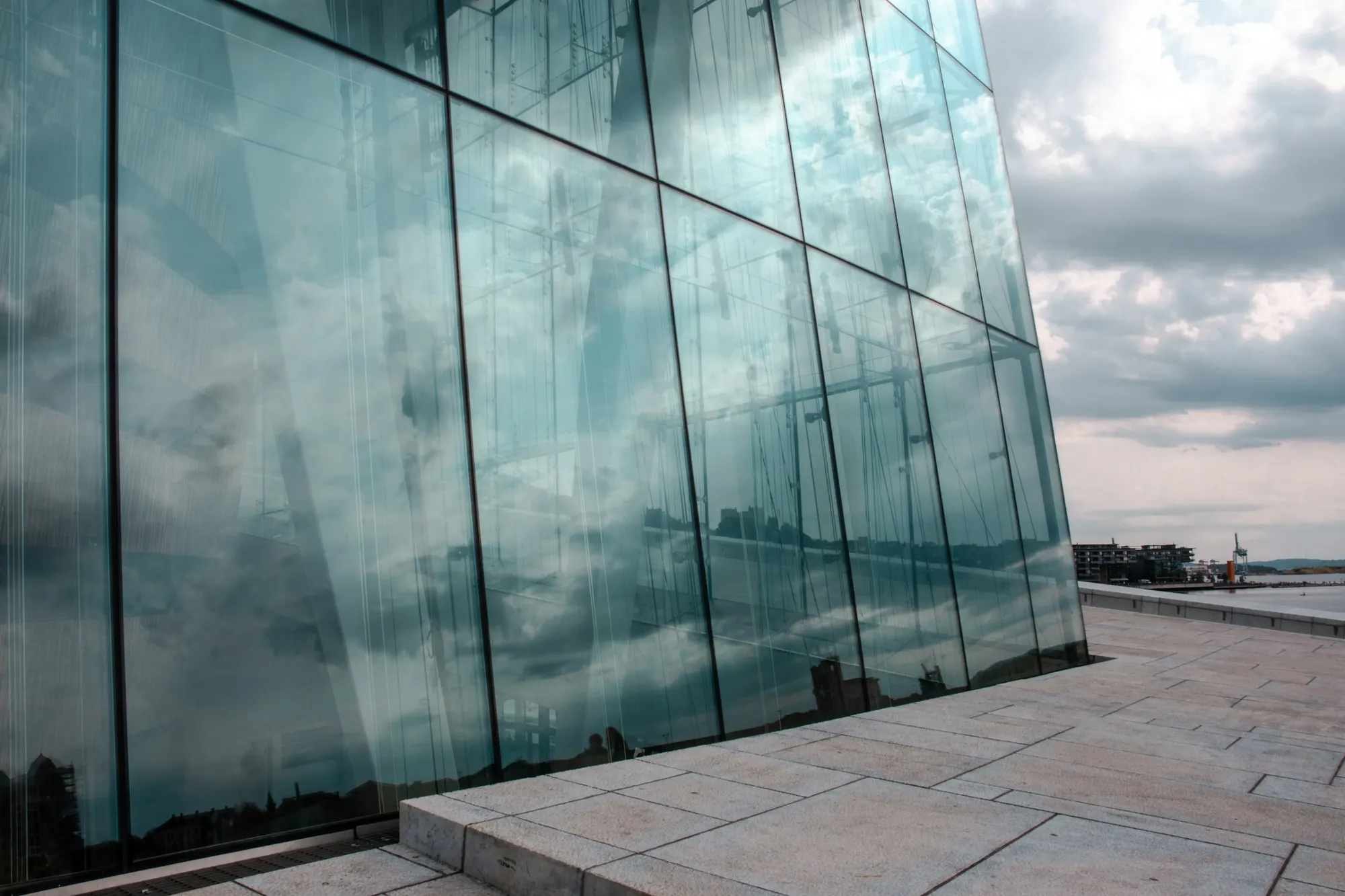
Designers often ask for the opaque band to match the vision glass exactly. It is a fair wish, but it runs into physics. Vision glass looks into a room, with light coming through it and a changing interior behind. Spandrel glass looks at a fixed, opaque surface. The two respond differently to angle, weather and time of day, so a match under a sample lamp can drift apart at sunset.
A low-e coating on the vision glass adds a further difference. The coating changes the colour and reflectivity of the glass, and the spandrel build-up may need a different face coating or a tint to come close. Rather than promising an exact match, ask the glass supplier to propose a build-up that reads as a close family, then judge it with real samples.
The same caution applies to reflectivity. A more reflective vision glass and a quieter spandrel will show a clear difference in the evening, even if both looked identical in the factory.
Heat, stress and ventilation
An opaque back absorbs sunlight and gets warm. The glass in front of it then heats unevenly: the middle warms while the edges stay cooler inside the frame. That temperature difference creates stress, which is why spandrel glass is normally heat-treated, and why the quality of the glass edge matters. The specification and the glass supplier set the glass type, and the facade consultant reviews it for the orientation and the build-up.
A shadow box also traps warm air in the cavity. Many systems vent or drain the cavity in a controlled way so that moisture does not sit against the back pan. A sealed cavity with trapped damp air can lead to staining or condensation on the inside of the glass, which cannot be cleaned. Ask how the cavity breathes, and where any moisture goes if it gets in.
Insulation behind the glass has to be fixed, supported and kept dry. Check that the back pan is mechanically held and that the insulation will not sag or slump over time. This is a thermal detail and a maintenance detail at once.
Fixing: captured or structurally glazed
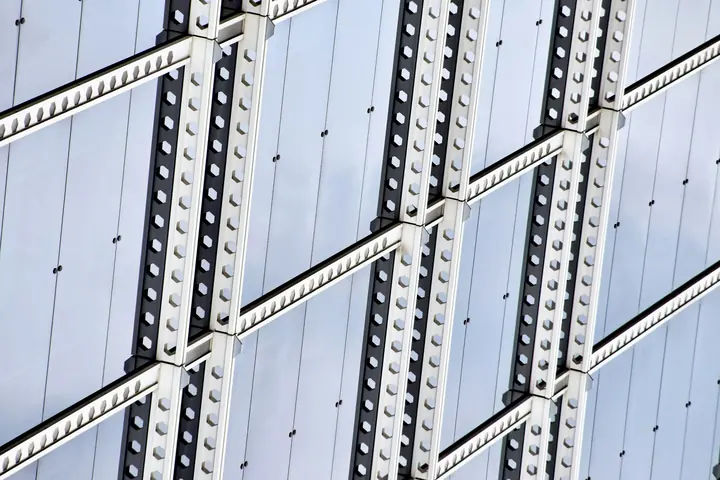
Spandrel glass can be held by a capped frame with pressure plates and caps, or by a structurally glazed bond with no visible caps. The choice should follow whichever system the vision glass uses, so that the elevation reads consistently. See how structural glazing works for the principle.
When the fixing differs between vision and spandrel zones, the joint lines can show. A captured vision zone and a bonded spandrel zone may have different sightlines, and the eye notices. If the design needs both, agree the sightlines early and show them on the shop drawings.
Fire, movement and the slab edge
The spandrel zone sits directly in front of the floor edge, where a fire-stopping barrier must close the gap between slab and curtain wall. The back pan and insulation should work with that barrier, not interrupt it. Details vary by project and by the fire strategy, so read firestopping at curtain wall slab edges and confirm the build-up with the fire consultant.
The slab and the frame move differently under load and temperature. The spandrel panel has to accept that movement without cracking its glass or tearing its seals. Check that the setting arrangement and the joints around the panel allow for it, in line with movement joints in facades.
Alternatives to glass in the opaque zone
Not every opaque band needs to be glass. Some designs use metal panels, aluminium composite, or other claddings in the spandrel zone, framed in the same grid. This can give a deliberate contrast, reduce reflected glare, or offer a different finish. Compare the options in terracotta, HPL or ACP cladding and ACP versus solid aluminium.
Whatever the material, the same questions apply. How is it fixed, how does it drain, how does it move, and how will a damaged panel be replaced without taking down the whole bay? A spandrel that is hard to replace becomes an expensive repair.
What to review in the mock-up
The spandrel is where a mock-up earns its cost. Ask for a full-height sample showing vision glass, the slab-edge zone and the next vision unit, built with the actual back pan, insulation and fixing. View it outdoors in morning light, harsh midday light and evening, from the ground and from a higher floor.
- Colour and reflection of the opaque band against the vision glass, at several angles.
- Visible joint lines, fixings and any distortion in the glass face.
- How the cavity is vented or drained and where moisture would leave.
- How the back pan and insulation are supported and kept dry.
- How a single damaged panel would be removed and replaced.
- How the build-up meets the fire barrier and movement joints at the floor line.
Record what you approve, with photographs and the sample reference, so the same standard can be compared against the delivered panels. Differences between batches of coated glass are easier to resolve when the approved sample is on file.
A short checklist before ordering
Confirm the build-up in writing: glass type and treatment, coating position, cavity treatment, back pan, insulation and fixing. Ask which parts are tested as a complete assembly and which are only assumed. Agree who coordinates the zone between the glass supplier, the framing supplier and the fire-stopping contractor, because each sees only part of it.
Ask how the project will handle a replacement panel years later. Coated glass is made in batches, and a panel ordered later may not match the original. Retaining a few spare panels from the first batch, stored flat and protected, is a practical answer for many projects, and the warranty terms should say how replacements are handled.
The opaque band is part of the building's identity. Treat it as a designed element, with its own samples and its own review, and it will do its quiet job without drawing attention to itself.
General guidance for orientation, not a specification. Applicable standards, values and details are confirmed per project with the facade consultant.