
Aluminium is the usual choice for facade frames. It is strong, light, durable, and easy to extrude into slim and complicated shapes, which is why a window or curtain wall frame can be so thin. It also conducts heat very well, around a thousand times better than the glass-filled gap it frames. For a part of the building whose job is to separate inside from outside, that is a problem, and the thermal break is the answer to it.
What a thermal break is
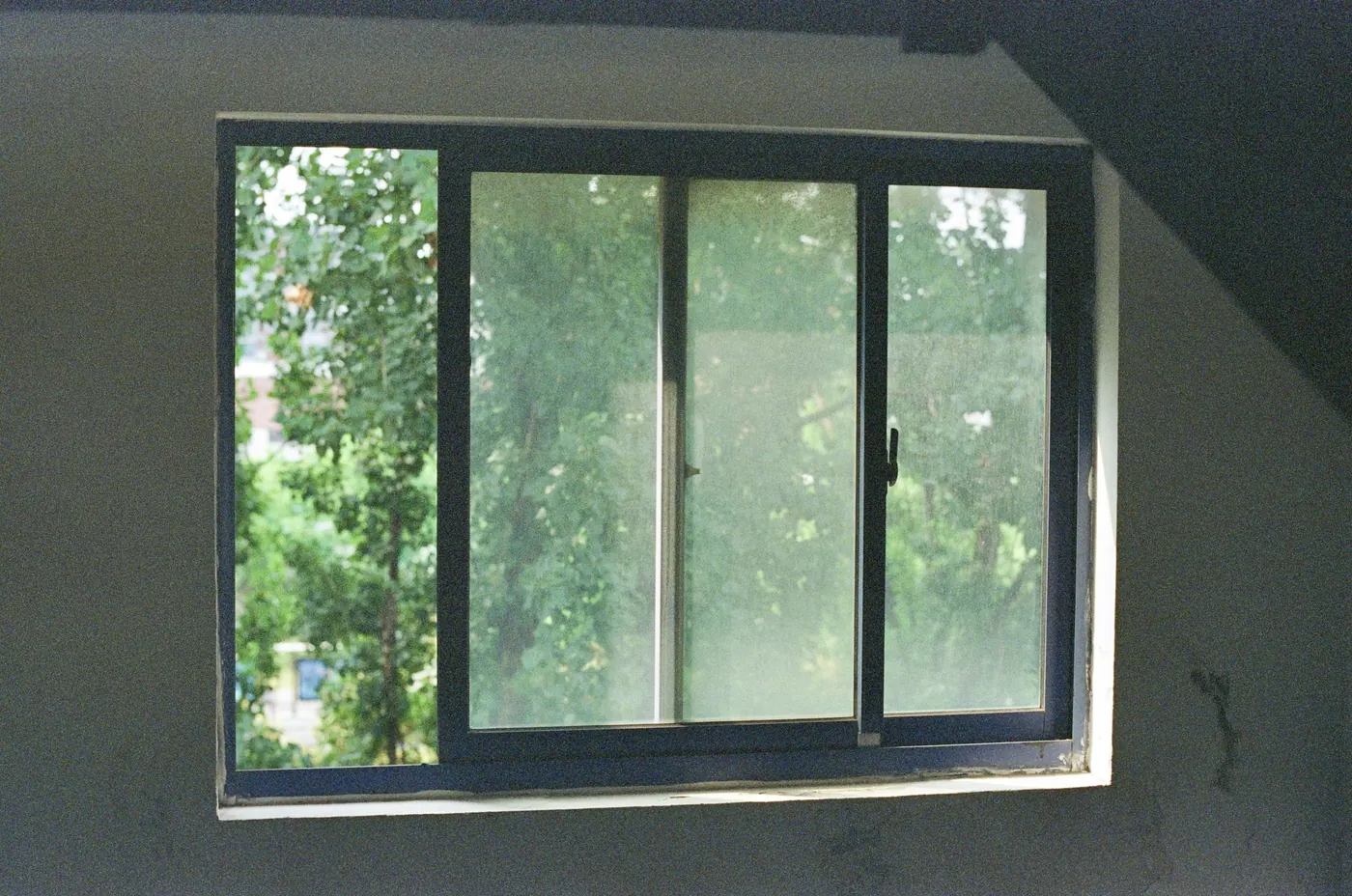
A thermal break is a strip of insulating material, often a glass-fibre-reinforced polyamide, that joins the inner and outer parts of an aluminium frame. The two halves are no longer one piece of metal, so heat has to cross the insulating strip instead of flowing straight through. The frame still behaves as a single structural member, because the strip is strong enough to transfer the loads between its two halves.
How a break is made
There are two common methods. In the first, the inner and outer aluminium sections are extruded separately, and one or more polyamide strips are rolled or crimped between them, locking the pieces together mechanically. In the second, a channel in a single extrusion is filled with a liquid resin, which sets, and then the metal bridge that was holding the two halves together is cut away. Both give a frame that is solid and insulating, and each has its own approvals and suppliers.
Whichever method is used, the strip is a structural part. It carries the loads between the inner and outer halves, so its shear strength and its behaviour at high and low temperatures are tested and published by the system supplier. A frame with a break of unknown origin is a frame with a question mark in it.
What it changes
- Less heat moves through the frame, which helps energy use, especially in air-conditioned buildings.
- The inner surface of the frame stays closer to room temperature, which reduces the risk of condensation on it.
- The frame no longer undoes the work of good glass.
- Comfort improves near the window, because the frame is not a cold or hot surface radiating into the room.
A frame is only part of a U-value
The U-value of a window or wall is not a property of the frame alone. It combines three things: the glass, the frame, and the edge where they meet, where the spacer in a double-glazed unit adds its own heat path. A good double-glazed unit with a low-E coating improves the glass part; a thermal break improves the frame part; a spacer made of an insulating material improves the edge. The weakest link sets the result.
This is why a quoted figure needs context. A very good glass value says little about the whole window, and a good frame value says little without the glass. When comparing products, compare the whole-assembly figure for a stated size, with the glass specified.
Condensation: why the inner surface temperature matters
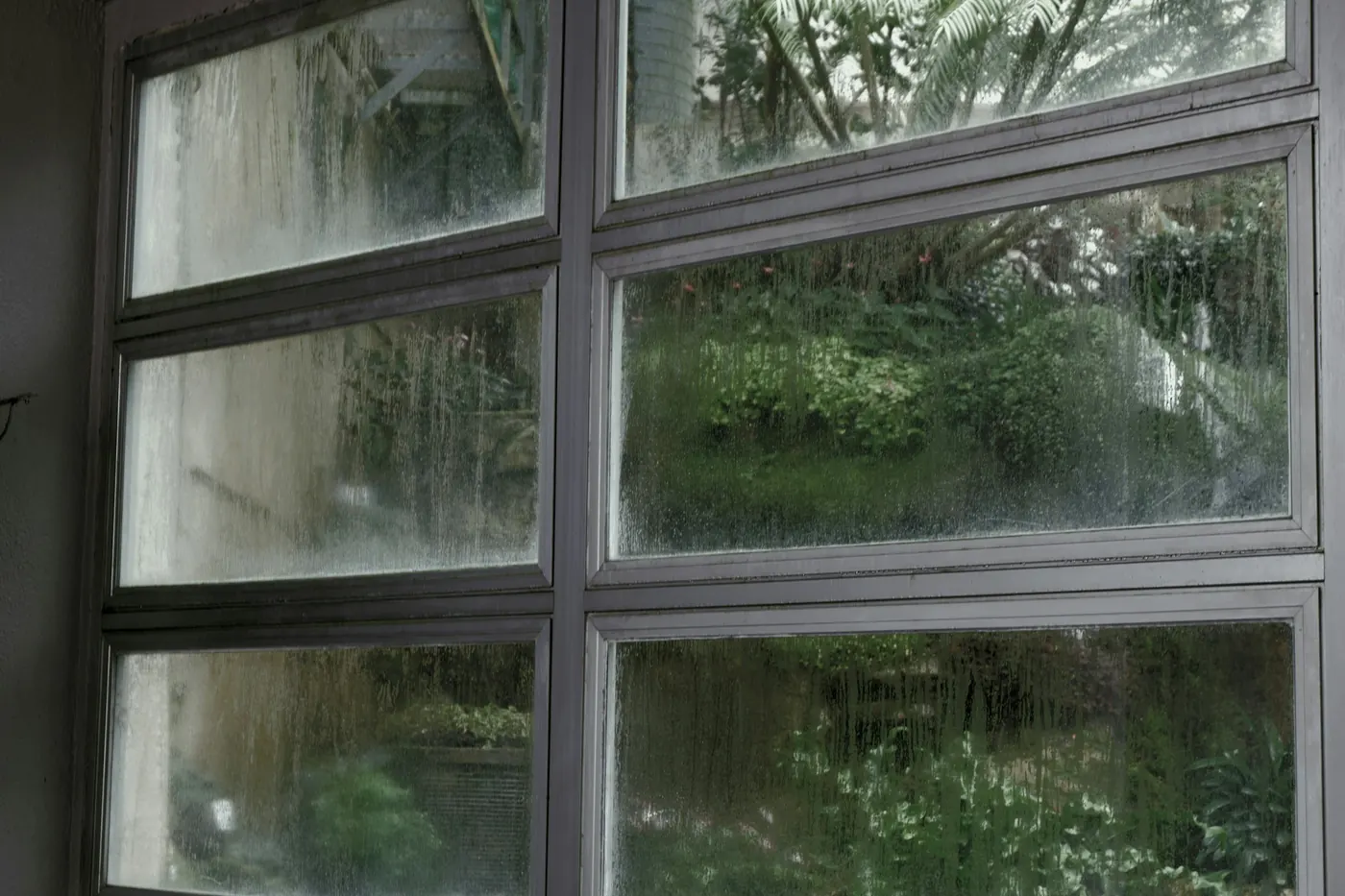
Water vapour in room air turns to liquid when it meets a surface colder than its dew point. In a cool-air-conditioned room on a humid day, a bare aluminium frame that is warm outside and cool inside can drop below the dew point on one side or the other. A thermal break keeps the surfaces on either side closer to the temperature of the air next to them, which reduces the risk of condensation on the frame, and with it the staining, dripping and mould that follow.
Where you find them
Thermal breaks appear in window and door frames, in curtain wall pressure plates and mullions, and in skylight framing, where condensation on the underside is a particular concern. They are also used in the brackets that carry cladding: a rain-screen bracket that conducts heat through the insulation to the wall behind is a thermal bridge, and the better versions are thermally isolated. Several Fenza systems, including skylights and canopies and the rain-screen carrier, are built on thermally isolated framing.
When you may not need one
A thermal break adds cost and depth. Where the frame is not between conditioned and unconditioned spaces, such as an internal partition, an unheated stair, or a shaded outdoor structure, it may add nothing. Even on external walls, if the building has no cooling and mild winters, the benefit is smaller than in a climate with strong heating or cooling loads. Your consultant will set the target against the climate and the building use.
Reading the numbers
Thermal figures come with letters, and the letters matter. Ug is the U-value of the glass alone, measured in the centre of the pane. Uf is the U-value of the frame. Uw is the value for the whole window or curtain wall unit, including the glass, the frame and the edge. A separate figure, often written as psi, describes the extra heat loss at the edge of the glass, where the spacer sits. Only Uw describes what you will actually get, and it depends on the size and shape of the unit, because a smaller unit has proportionally more frame.
When you are shown a figure, ask which letter it is, for what size, and with which glass. A very good Ug next to an ordinary frame gives an ordinary window, and a headline number that quietly leaves out the frame and the edge is a common source of disappointment.
The edge of the glass
Between the two panes of a double-glazed unit sits a spacer, and the spacer is a thermal bridge of its own. A metal spacer conducts heat around the edge of the glass, so the glass is colder there, and condensation shows first along the edge. A "warm-edge" spacer made of a less conductive material reduces this. It is a small change that improves the edge value and the comfort near the glass, and it is worth asking for where condensation or energy use matters.
The break and the structure
The strip in a thermal break is not only an insulator. It joins two pieces of metal that must still act together under wind and the weight of the glass, so the strip's strength and its stiffness in shear are part of the structural design. The system supplier publishes these properties and tests them, and the designer uses them when sizing the profiles. If a different strip or a different profile is substituted, the structural check has to be done again. That is another reason to specify the system, not only the look.
Mistakes to avoid
- Quoting a glass-only U-value as if it were the window's.
- Comparing figures for different window sizes. A small window has a worse value than a large one, because the frame is a bigger share.
- Assuming every aluminium system is thermally broken. Check the specification line by line.
- Ignoring bridges elsewhere: brackets, anchors, and the junction with the wall.
- Overlooking condensation at the glass edge, where the spacer matters.
What to ask
- The whole-assembly U-value, from test or calculation, for the project's actual glass, not the glass alone.
- The frame's own value and the width and material of the break.
- Whether the figure is for the system as it will be built, or for a different configuration.
- What the spacer is made of, and how the edge of the glass is treated.
- How the thermal break strip is approved and how its structural performance is documented.
Values published by Fenza are indicative until confirmed per project with the facade consultant. See Skylights & Canopies and Rain-Screen Ventilated Facade for the systems built on thermally isolated framing.
General guidance for orientation, not a specification. Applicable standards, values and details are confirmed per project with the facade consultant.