The facade is the most visible part of a building, it keeps out rain and wind for decades, and it sits on the critical path. Yet facade contractors are often compared on one number: the price per square metre. This checklist sets out what to check before you appoint anyone, anywhere in India, so that the prices you compare are for the same thing, from a company that can deliver it.
Who actually makes the facade?
The words "facade contractor" cover very different businesses. Some design, fabricate and install. Some install systems that someone else has made. Some buy and resell, and subcontract everything. All three can be honest businesses, but you should know which one you are dealing with, because it decides who controls quality, who fixes problems, and whose name is on the warranty.
What they do
- Manufacturer
- Designs, fabricates and usually installs, from its own factory.
- Installer
- Installs frames and glass made by someone else, often to someone else's design.
- Trader
- Buys systems or fabricated items and resells them. Design, fabrication and installation are subcontracted.
Control of quality
- Manufacturer
- Controls cutting, machining, assembly and checks in one place.
- Installer
- Controls the site work, but depends on the fabricator for what arrives.
- Trader
- Controls little directly, and relies on the companies behind it.
Engineering
- Manufacturer
- Usually has in-house design and calculations.
- Installer
- May rely on the system supplier or an outside engineer.
- Trader
- Often relies entirely on others.
When something goes wrong
- Manufacturer
- One party is responsible from drawing to handover.
- Installer
- Responsibility can split between the installer and the fabricator.
- Trader
- Responsibility can be spread across several firms you have no contract with.
The question to ask
- Manufacturer
- Can we visit the factory, and which items are made there?
- Installer
- Who fabricates, and who answers for fabrication defects?
- Trader
- Who designs, makes and installs, and are they named in the contract?
Ask directly: who cuts the aluminium, who machines it, who assembles it, who glazes it and who installs it? If the answer is several company names, ask for them in writing.
Design and engineering in-house
A facade is engineered, not just drawn. Someone must check that the profiles, glass and fixings can take the design wind load for your building's location and height, and that the frame allows for the movement of the structure. Ask who does the structural calculations, whether the engineer is on staff or outside, and whether you will receive the calculations for review.
Then ask about shop drawings. These are the detailed drawings the factory works from, and they are what the architect and the facade consultant approve. Ask to see a sample set from a past job, with client details removed. Good shop drawings show every interface: slab edge, head, sill, corners, movement joints and the junction with other trades. Vague drawings at this stage become arguments on site.
Fabrication you can see
Brochures all look alike. A factory visit tells you more in an hour than a dozen presentations, and you do not need to be an engineer to learn from it. Look for:
- Cutting: saws set up for accurate square and mitred cuts, with cut lengths checked against a cutting list.
- Machining: drilling and routing for drainage, hardware and joints, by copy router or CNC, done to a drawing rather than by eye.
- End-milling: transoms machined to fit the mullion profile, so that joints close neatly and seal properly.
- Corner crimping: window and door frame corners joined with cleats and fixed the same way every time, not improvised.
- Assembly and glazing areas that are clean, covered and organised, with gaskets and sealants stored as their makers require.
- Quality checks: who checks dimensions, finish and assembly, and what records they keep.
Ask to see work in progress for a real project, not a showroom sample. See how a facade fabrication line works for what each step does.
Materials and traceability
A facade is a kit of parts from several suppliers. Ask where each one comes from and how it is tracked.
- Aluminium: the extrusion source, the alloy and temper specified, and whether mill certificates come with each delivery.
- Glass: which processor toughens, laminates or makes up the insulated units, and how each pane is labelled and traced to its records.
- Hardware: the make of hinges, handles, locks and stays, and the load and durability ratings their supplier states.
- Gaskets: the material, and whether they are matched to the system they are used in.
- Sealants: whether the structural silicone and weather sealants have been checked for compatibility and adhesion with the glass, gaskets, finishes and other materials they touch on your project.
- Finishes: the coating type, who applies it, and how its thickness is checked.
If a contractor cannot say where a component came from, they cannot say what to replace when it fails.
Testing
Testing shows whether the design, as built, does what the specification asks. The usual route is a mock-up: a full-size section of the facade, built with production materials and tested in a third-party laboratory against the project specification. Common tests include ASTM E283, which measures air leakage, ASTM E331, which measures resistance to water penetration under pressure, and ASTM E330, which measures structural performance under wind load.
Ask the contractor which laboratory they propose, who builds the mock-up, how the test sequence is agreed with the consultant, and what happens if a test fails. A good answer covers retesting and how a fix is carried into production. Be wary of an old test report offered in place of a test for your project: a report for a different system, size or wind load tells you little. Read what ASTM E331 tests and how facades are tested for more.
Installation and site safety
Ask whether installation is done by the contractor's own teams or subcontracted. Subcontracting is common and not wrong in itself, but you should know who the installers are, who supervises them, and who answers for their work. Ask who will lead the site, and whether they will stay for the whole job.
Facade work is work at height. Ask for the contractor's safety approach in writing: method statements, how lifts are planned, how edge protection, scaffold and cradles are managed, and how workers are trained and checked. Then ask to see it in practice on a current site. See quality and safety for the kind of checks to expect.
Projects in another city
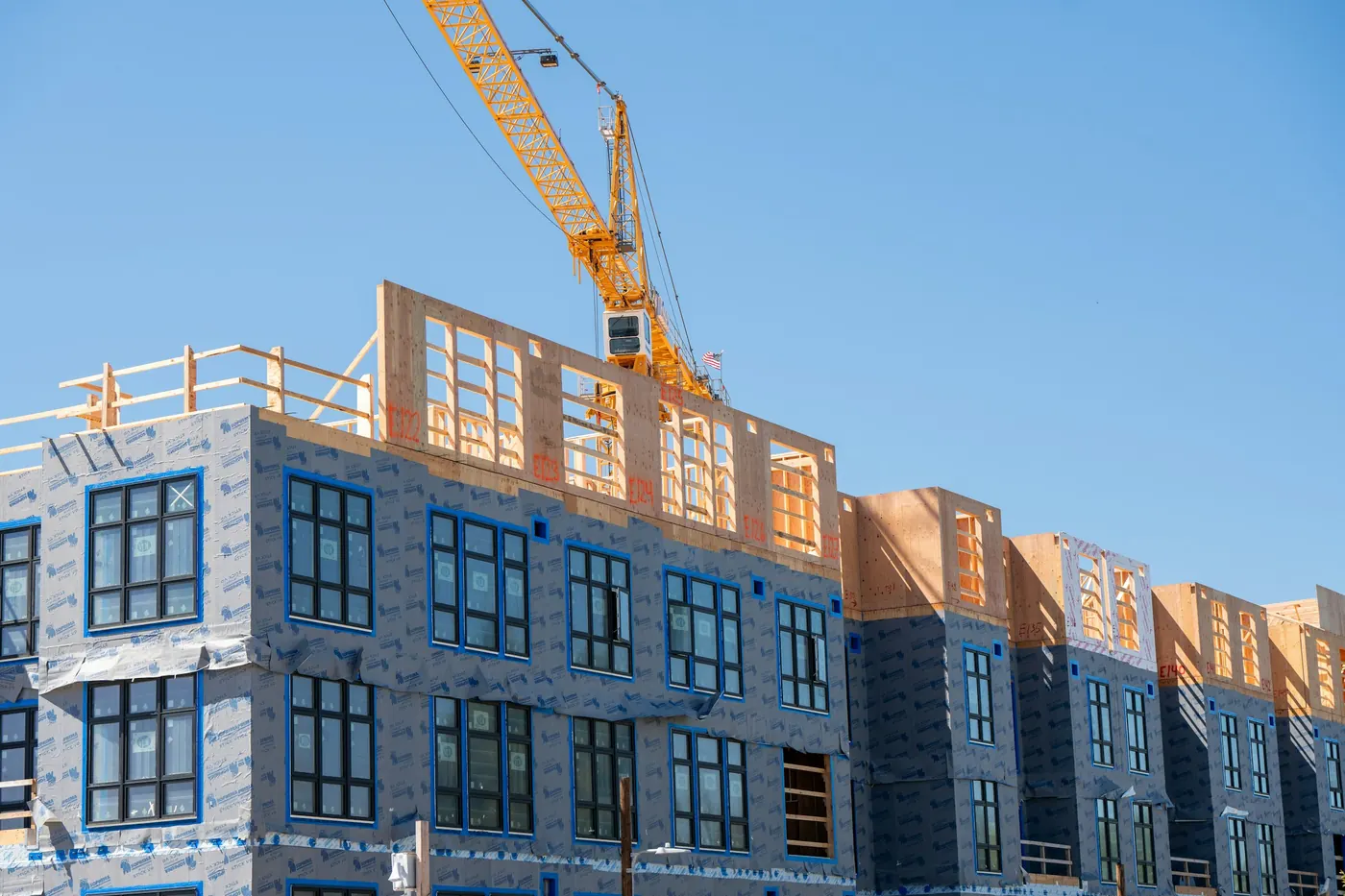
Many facades in India are made in one city and installed in another. That works well when it is planned. Ask:
- How will fabricated material travel from the factory to site, how is it packed, and who is responsible for damage in transit?
- How are deliveries sequenced, so that items arrive in the order they will be installed and do not sit exposed on site?
- Where will the site team come from, and who manages them day to day?
- How quickly can replacement parts or a damaged pane be supplied if something breaks on site?
Ask for a programme that shows shop drawings, mock-up, production, transport and installation as separate lines, not one bar.
Reading and comparing quotes
Quotes are rarely like for like. Before comparing totals, put them side by side and check:
- Scope: the same areas, systems, glass, finishes and interfaces in each.
- Exclusions: scaffold, access equipment, cranes, testing, the mock-up, cleaning, protection, anchors and site storage are common ones.
- Assumptions: the wind load, the drawing revision, glass sizes, the programme and working hours.
- Specification: alloy, profile depth, glass make-up, and hardware and sealant makes, written down rather than left as "or equivalent".
- Variations: how changes will be priced.
- Programme: dates for shop drawings, the mock-up, production and installation.
A low price with a long list of exclusions is often not the lowest price. If one quote is far below the others, ask what has been left out. What to send a facade manufacturer covers the information that makes quotes comparable in the first place.
Contract points to settle
- Drawing approval: who approves the shop drawings, how long each review takes, and what happens to the programme if approval is late.
- Warranty: what it covers (materials, workmanship, weather-tightness, finishes, glass), how long each part lasts, and who stands behind it. Get it in writing, and check whether the makers' warranties for glass, coatings and hardware are passed on to you.
- Retention: how much is held back and when it is released. Agree it before signing, not at handover.
- Defects period: ask how long it is, how defects are reported, and how quickly the contractor must respond. Get it in writing.
- Handover documents: as-built drawings, test reports, material certificates, and maintenance and cleaning instructions.
- Interfaces: who seals the facade to the structure, the roof, the waterproofing and the neighbouring trades.
Red flags
- No factory to visit, or a visit that keeps being put off.
- A quote far below the others, with no explanation.
- Specifications written as "or equivalent" throughout.
- Reluctance to build and test a mock-up, or an offer to reuse an old test report instead.
- A warranty promised in conversation but missing from the contract.
- Pressure to sign quickly, or a large advance asked for before drawings are approved.
- Certifications or test results that are mentioned but cannot be shown on paper.
Questions for the first meeting
- Do you fabricate yourselves, and can we visit the factory?
- Who does the structural calculations and the shop drawings?
- Where do the aluminium, glass, hardware and sealants come from, and how are they traced?
- How do you propose to test the mock-up, and which laboratory would you use?
- Will your own teams install, and who will lead the site?
- How will you deliver to, and manage, a site in our city?
- What does your quote exclude, and what have you assumed?
- What warranty do you give in writing, and who stands behind it?
A contractor who answers these clearly, and puts the answers in writing, is usually one you can work with. One who avoids them is telling you something too.
If you would like to put these questions to Fenza, send us an enquiry.
General guidance for orientation, not a specification. Applicable standards, values and details are confirmed per project with the facade consultant.