A facade can leave the factory perfect and reach handover scratched, stained and half-sealed in the wrong places. The damage is rarely the fault of the maker or the fixer. It comes from the months between installation and completion, when plasterers, painters, tilers, scaffolders and cleaners all work near surfaces that were never meant to take rough treatment. Protection is a plan, not a roll of tape.
Why the risk peaks after installation
During fabrication, finished parts are handled by people who know what they are holding. Once installed, they become part of a building site. Other trades focus on their own work and have no reason to think about a thin finish on a window frame. Damage is usually accidental: a dragged ladder, a grinding spark, a wet mortar bucket, a strong cleaner used on the wrong surface.
The facade programme is also under pressure. Glazing often goes in early to close the building, and internal trades then work for months behind it. The longer the gap between installation and handover, the more exposure each surface suffers. A realistic protection plan starts when the first frame is fixed, not when the first complaint arrives.
Protective film: useful, but not magic
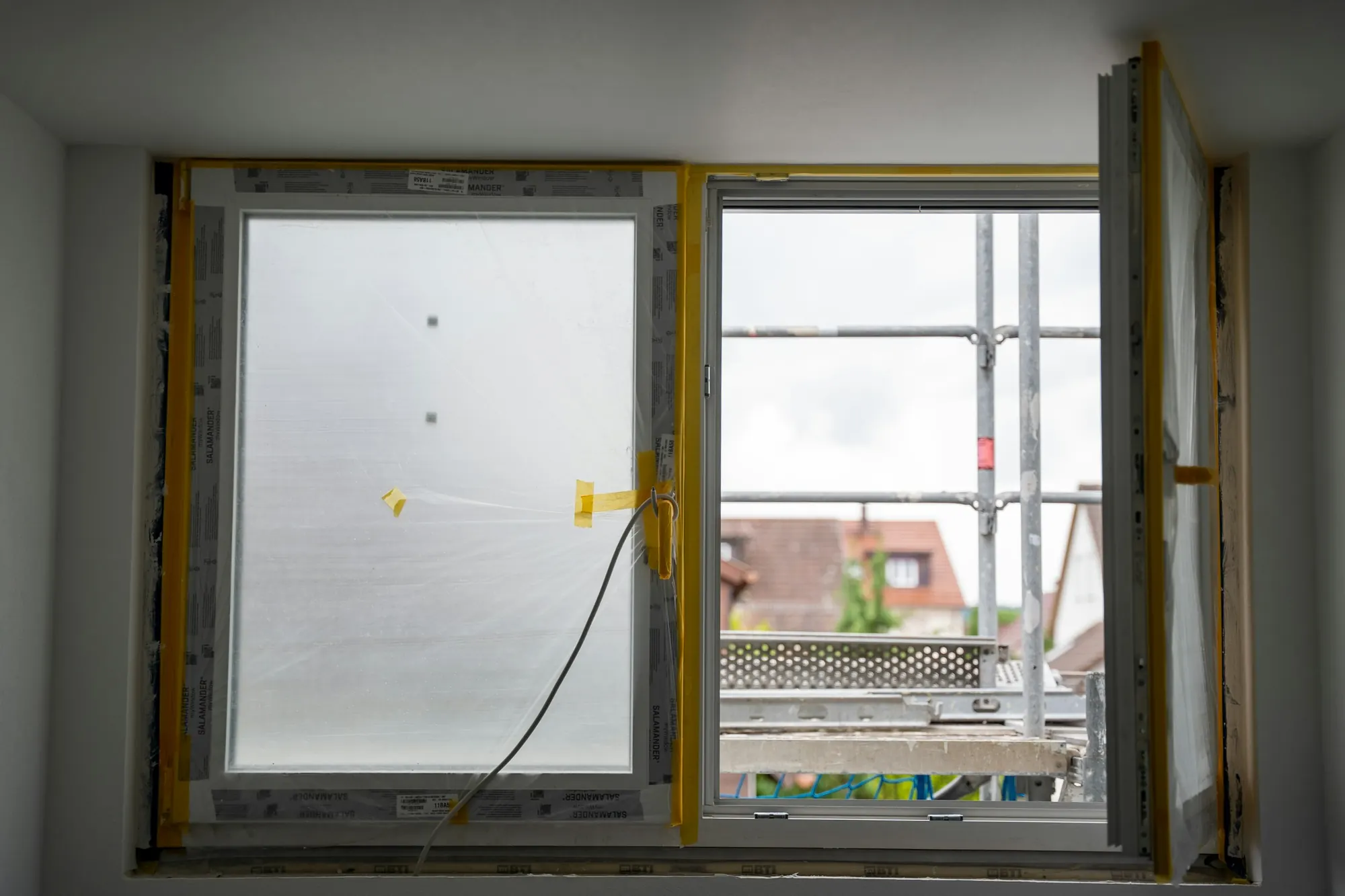
Protective film is a thin adhesive layer applied in the factory to shield metal surfaces from scratches and splashes. It works well for what it was made for. It does not make a surface immune to a hammer, and it has a working life. Sun and heat can harden the adhesive, and film left on too long can be hard to remove or leave residue.
Ask the supplier for the film type, the maximum recommended exposure and the removal method. Then plan removal into the programme, ideally elevation by elevation, once the dirty work above and around is finished. Film removed too early leaves bare metal exposed. Film removed too late can be a stubborn cleaning problem. Either way, put the date in the programme and give someone the job.
Check that film is applied to the right faces. Some parts, such as sealant contact surfaces, must stay clear because sealant will not bond reliably to film. Fabricators normally mask or strip film from bonding zones, and the installer should confirm those zones before the sealant joint is formed.

Scaffolds, hoists and access equipment
Scaffold tubes, ties, brackets and hoist guides all touch the building. A tube resting on a frame can scratch it and can also trap water and dirt. Ties through the facade line can damage seals if they are removed carelessly. Agree where scaffold ties may pass, who removes them and who makes good the opening afterwards, before the scaffold goes up.
Use soft packing at contact points and keep scaffold boards and tools clear of finished surfaces. If the facade contractor works from the scaffold, the scaffold designer should know the facade loads and fixing zones. Do not let a scaffold tie into a mullion or a glass edge unless the facade engineer has approved the position. The scaffold is temporary, but a damaged unit may stay for decades.
Cradles and building maintenance units come later, and their guide rails and wheels need the same care. Treat the first use as part of the protection plan, not as a routine event, and record the condition of the surfaces they touch. Access planning also links to the cleaning and maintenance design of the finished building.
Other trades and the materials they bring
Wet trades are the biggest risk. Fresh cement, plaster, lime and grout are alkaline and can stain or etch metal and glass. Paint and solvent drips are harder to remove than most people expect. Acid washing of stone, tile or brick is especially harmful to metal finishes and glass coatings, and a single careless wash can undo a year of careful installation.
- Cover sills, frames and glass below any wet work before it starts, using material that stays in place and does not abrade.
- Keep acid and strong cleaners away from the facade, and agree a cleaning method with the finish supplier first.
- Wash off cement and plaster splashes promptly, using the method the finish supplier approves, never a scraper or abrasive pad.
- Shield glass from welding sparks and grinding dust, which can embed in the surface and cannot be polished out.
- Tell painters and tilers which surfaces are finished and which are not, in writing and on site.
These rules matter most at the base of a building, where stone work, paving and landscaping happen last. The same site that finished its upper floors cleanly can damage the ground-level frames in the final weeks. Put a clear note in the trade packages, so subcontractors price the care they are expected to take.
Know the finish you are protecting
Different surfaces fail in different ways. An anodised layer is part of the metal and resists wear well, but it can still be marked by alkaline splashes and scratched by hard tools. A painted or coated surface can chip or mark and is harder to touch up invisibly. Choosing between them is covered in anodised, powder-coated or PVDF, and the protection plan should follow the choice.
A mill finish has no applied coating, so it can mark from fingerprints, moisture and contact with other metals. It often needs the most careful handling and storage. Where a mill finish is used behind a screen or in a concealed area, the risk is lower, but staining can still appear if it is left wet or stacked with damp packing. The finish supplier should state handling and cleaning rules for each surface used on the project.
Glass needs its own care. The notes in glass on site: handling, storage and protection cover the period before installation, and the same awareness applies afterwards: protect edges, avoid abrasive cleaning, and flag any scratch early so it can be assessed rather than hidden.
Protect the joints and the drainage
Sealant, gaskets and drainage openings need protection as much as visible surfaces. Fresh sealant must cure undisturbed and should not be painted over, soaked in solvent or covered with tape that pulls at it. Weep slots and drainage paths must stay open, so cover them only with material that is removed afterwards. The details of what each seal does are set out in sealants and gaskets in facades.
Debris is a quiet enemy. Mortar droppings, packing tape, paint skins and construction dust can collect in sills and tracks and block the drainage path. A final clean of channels and slots before handover is a basic step, and it ties into the checks in window drainage and weep holes. A blocked path may not show until the first heavy rain.
Write protection into the contract and the programme
Protection fails when nobody owns it. Decide at contract stage who supplies film, covers and barriers, who maintains them, and who removes them. State what condition the facade must be in when each elevation is handed over to the main contractor, and how that condition is recorded. Without a recorded starting point, every later scratch becomes an argument.
Photograph each elevation at handover to the next trade, with date and location. Keep a simple log of who worked there and when. If damage appears, the log shows who was present and the photographs show what was already marked. This record also supports any later claim under the terms described in facade warranty and defect liability, where the cause of a defect often decides who pays.
Build the protection tasks into the programme with dates: film removal, final clean, drainage clear-out and handover walk-through. A task with no date tends not to happen. Review the sequence against the installation sequence so that dirty work finishes before the final clean, not after it.
A simple protection checklist
- Confirm film type, exposure limit and removal method with the supplier.
- Agree scaffold tie positions and who makes good the openings.
- Brief every trade on which surfaces are finished and what must not touch them.
- Cover surfaces below wet work, and remove splashes promptly.
- Photograph each elevation at handover and keep the access log.
- Clear channels, slots and drainage paths before the final clean.
- Remove film on a planned date, then inspect and record the finished surfaces.
None of this is complicated, but all of it needs a name against it. A facade that arrives in good condition and stays that way is usually the result of a dull, specific plan agreed before the first frame went up.
General guidance for orientation, not a specification. Applicable standards, values and details are confirmed per project with the facade consultant.