Most designers meet the bird-strike problem late, usually when a client, planning condition or sustainability rating asks for it. By then the glass is often chosen and the elevation drawn. It is better handled early, because the best measures are decisions about pattern, position and shading rather than add-ons. This article explains why birds hit glass, where the risk sits on a building, and the facade-side choices a design team can make without giving up daylight or the view.
Why birds hit glass
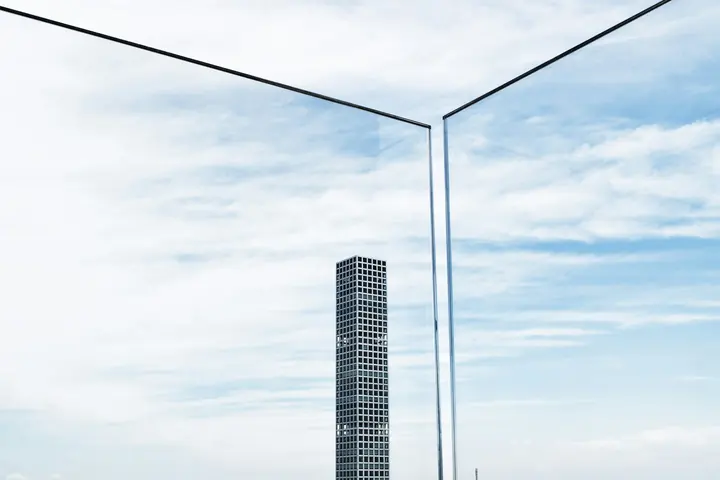
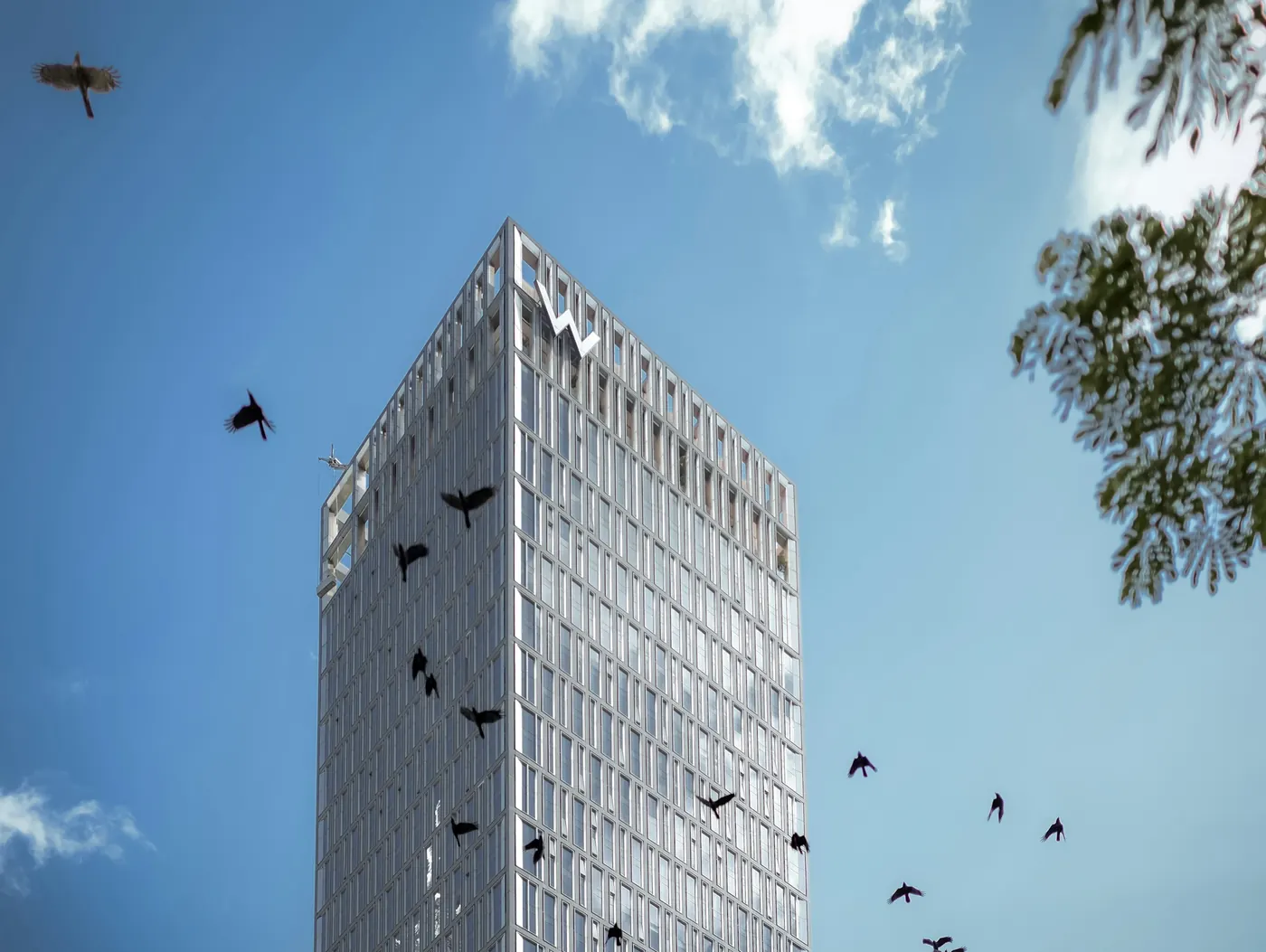
Birds do not see a pane of glass as a solid object. They see what the glass shows them. Clear glass lets them see through the building to sky, plants or another opening, so it reads as a passage. Reflective glass mirrors trees, clouds and neighbouring buildings, so it reads as more of the landscape. In both cases the bird flies at what it believes is open space.
This is why a building does not need to be tall to be a problem. A low pavilion beside a garden can be as risky as a tower. Strikes also depend on light, season and the surroundings, so two similar facades can behave very differently. The aim of the design is not to make glass less attractive to people. It is to give birds a visual cue that this surface is a barrier.
Reflection and transparency are different problems
Designers sometimes assume that reducing reflectance solves the issue. It helps with one half of the problem only. A low-reflectance pane still shows the interior and whatever lies beyond it, so a corner room, a lobby with plants or a glass link between two blocks can look like a tunnel. The reverse is also true: a pattern on clear glass can do little if bright reflections wash it out at certain times of day.
Think of the two effects separately. Reflection is controlled by the glass coating, the angle of view and what the facade faces. Transparency is controlled by what sits behind the glass: planting, light, open floor plates and the second layer of glazing. A low-E coating chosen for energy performance changes the look of the glass, so check its reflection on a large sample rather than assuming the figure on a data sheet tells the whole story. The reflectivity article covers that side in more detail.
Patterns birds can read
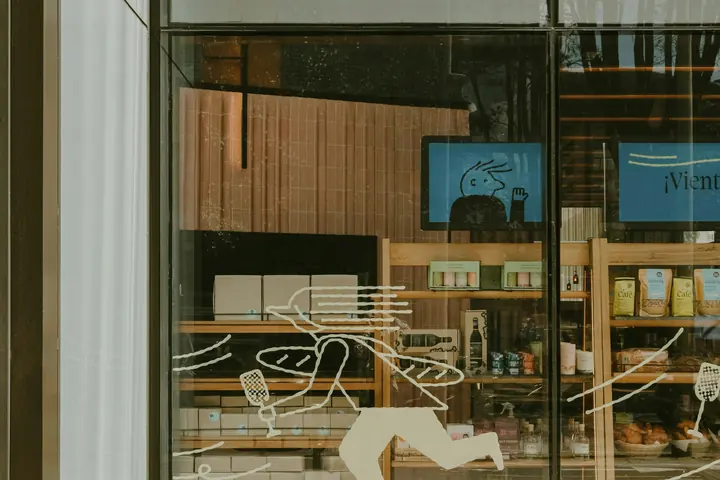
The most common approach is to place a visible pattern on the glass. Birds tend to respond to marks that are high in contrast, closely spaced and continuous across the surface, so a bird does not read the gaps as a safe path. Dots, lines, grids and etched or fritted treatments are all used. Fine patterns are less intrusive from inside, but they must still be dense enough to be seen from the outside in poor light.
The surface where the pattern sits matters. On an outer surface it is visible whatever the sky does. On an inner surface of an insulated unit it may be less visible when reflections are strong. A pattern on a laminated interlayer or an inner glass surface needs to be tested for how it looks from outside. Ask the glass supplier which surfaces can carry which treatment, and keep the glass build-up consistent with that choice.
- Ceramic frit: baked-on dots or lines on glass; good durability and a range of densities.
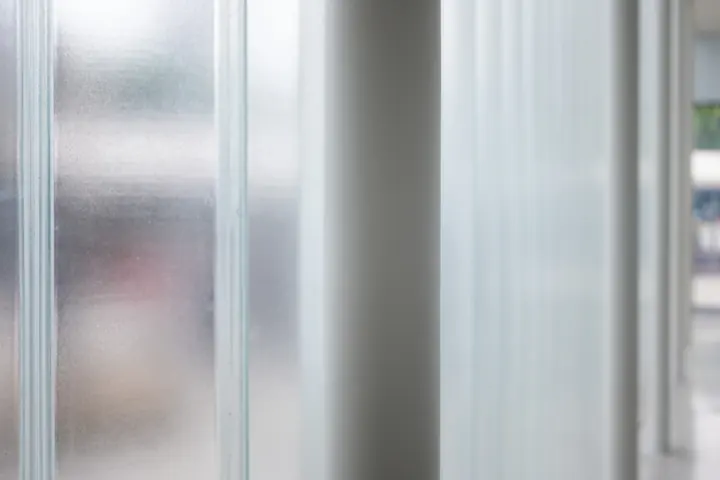
- Acid etching or sandblasting: a frosted pattern; check how it reads from outside and how it is cleaned.
- Applied film: quick to add on existing glass; durability and cleaning method need checking.
- UV-reflective patterns: marketed as visible to birds but not to people; evidence and appearance vary, so ask for independent test information.
Where the risk sits on a facade
Not every pane needs the same treatment. Risk is usually highest where glass faces vegetation, water or a green roof, at corners where an opening can appear to continue through, and in glass balustrades, walkways and screens that read as continuous air. Levels at the height of tree canopies deserve special attention. A mid-height tower elevation facing a bare street may need less than a ground floor beside a courtyard of mature trees.
Start with a simple map of the elevations. Mark nearby planting, water, open sky corridors, courtyards and reflective neighbours, then shade the panes that need a stronger measure. This lets the team concentrate the treatment where it counts, and often keeps the upper floors clear. An ecologist or local conservation group may be able to tell you which species and seasons are the real concern.
Using the glass itself
Within the glazing, the main levers are pattern, coating position and interlayer. A glazing package can include a patterned outer pane, a laminated pane with a visible interlayer, or a tinted outer surface that reduces transparency. Laminated glass also helps in a different way: it stays in one sheet if a bird or a falling object breaks it, which matters over walkways and entrances. See laminated glass for how the interlayer behaves.
Coatings are a trade. A strongly reflective coating may reduce solar heat but increase mirror effect. A lower-reflectance coating may cut that effect but allow more see-through. The choice should be made with the energy and daylight targets in view, not as a separate bird-safety decision made later on a finished elevation. Agree the combination on a mock-up so everybody judges the same glass.
Screens, fins and external layers
A second layer outside the glass is often the most effective answer, because it makes the barrier obvious and reduces sun at the same time. Perforated metal screens, vertical fins, louvres and slender external meshes all work in principle. They have to be spaced and sized so a bird does not read the gaps as a flight path. The perforated screens guide and the sun-shading fins guide cover how these elements are built and fixed.
A screen has its own considerations: cleaning access, wind load, fixings and the effect on the view. Where it hangs off a curtain wall, the bracket loads need to be checked with the wall designer. Where it forms part of a double-skin arrangement, ventilation and maintenance in the cavity matter too. The advantage is that a good screen deals with several issues at once: solar control, privacy, glare and bird safety.
Trade-offs to discuss early
Every measure has a cost in view, light or maintenance. Dense fritting reduces daylight and can alter colour. External screens add weight, joints and cleaning tasks. Films may need replacement. None of this is a reason to avoid the issue, but it is a reason to bring it in at concept stage, when the elevation, the glass type and the shading strategy can be developed together.
- View: judge a full-size sample from the room, at the viewing distance, in daylight.
- Daylight: confirm that a pattern or screen still meets the daylight target.
- Glare: check the pattern in low sun and from neighbouring buildings.
- Cleaning: confirm that the pattern survives the agreed cleaning method.
- Replacement: ask how a damaged patterned pane will be matched years later.
Specifying and checking
A good specification states which elevations and levels receive treatment, the surface carrying the pattern, the pattern geometry and the acceptance standard for appearance. It also names the approval route: a sample, then a mock-up, then a first-installed panel. Because the visual effect depends on light, the sample should be examined outdoors, against the real background, at a realistic viewing distance.
Check also that the pattern aligns across units and across the joint between glass and frame, so it reads as continuous. At corners and where spandrel glass meets vision glass, mismatches are easy to miss on a drawing. A mock-up bay is the best place to find them, and it is the right moment to ask the facade consultant to confirm that the treatment, the frame and the glass supplier's process all agree.
After handover
Bird-friendly measures need a short note in the building's maintenance manual. Cleaners should know which cleaning agents and tools are safe for etched surfaces or films, and which screens must not be removed. Facilities teams should know that a replacement pane has to carry the same pattern, on the same surface, in the same orientation.
It is also worth recording what is observed. If strikes continue at one corner, a simple addition of external markers or a revised planting layout may solve it. Treat the facade as something that can be adjusted after occupation, with a clear record of what was installed and why.
General guidance for orientation, not a specification. Applicable standards, values and details are confirmed per project with the facade consultant.