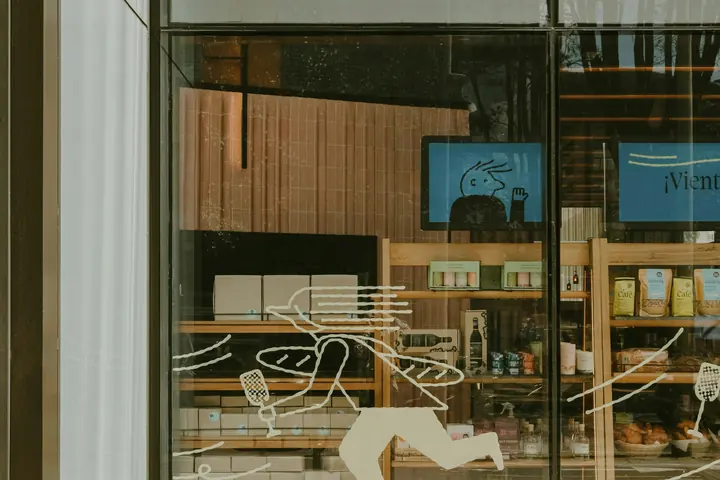
Privacy is one of the most common reasons to change a glass specification. A bathroom on a street front, a ground-floor office, a residential tower close to its neighbour, or a meeting room on a public corridor all need some glass that lets light in without letting the view through. The market answers with many products, all loosely called privacy glass, that work in quite different ways.
This guide compares the main options for external glazing: frosted, fritted, translucent laminated, tinted or reflective, and switchable glass. It looks at how each one hides the view, how it behaves after dark, what it does to daylight and heat, and what to check before the glass is ordered.
Two ways to stop a view
Glass can hide what is behind it in two broad ways. It can scatter light, so that shapes are blurred whatever the lighting. Etched, sandblasted, translucent laminated and fritted glass work like this. Or it can rely on brightness, so that the brighter side sees a reflection and the darker side sees through. Tinted and reflective glass work like this.
The difference matters most at night. Scattering glass keeps its privacy when the room lights are on. Brightness-based glass reverses: during the day the outside is brighter and the glass looks like a mirror from the street, but in the evening the lit room becomes visible from outside. A brief that asks for privacy should say when it is needed.
Frosted glass: etched and sandblasted
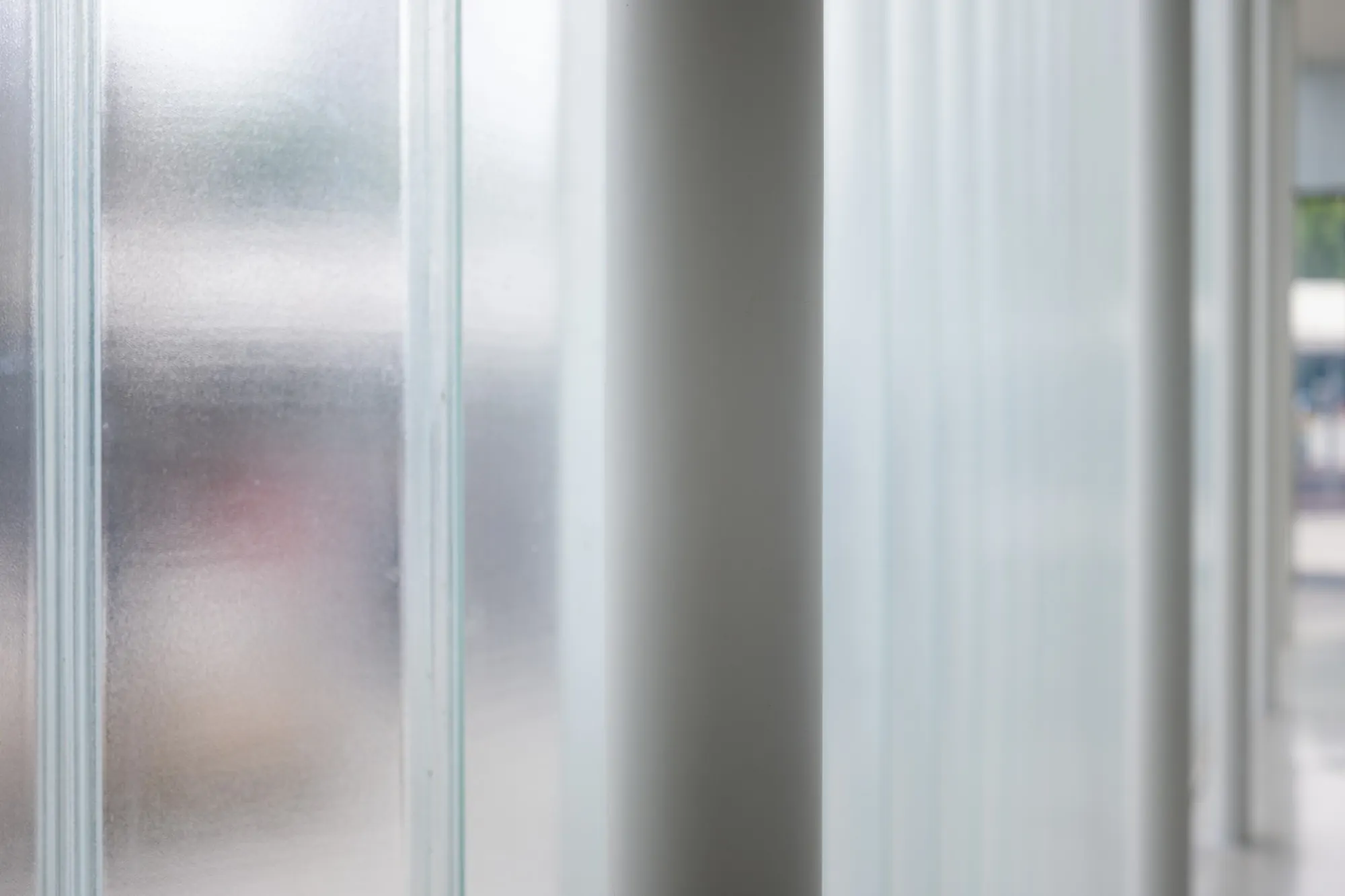
Frosted glass has a roughened surface that diffuses light. Acid etching gives a smooth, even satin finish. Sandblasting gives a coarser texture and can be done in patterns, bands or graphics using a mask. Both turn a clear pane into a translucent one, with soft daylight and a blurred view.
The roughened face needs some care. Fingerprints, grease and sealant can show on it, and it can be harder to clean than a smooth face. Many specifications place the etched surface toward a sealed cavity or toward the interior so that it is protected from weather and dirt. Ask the supplier which surface is treated and how that face should be cleaned.
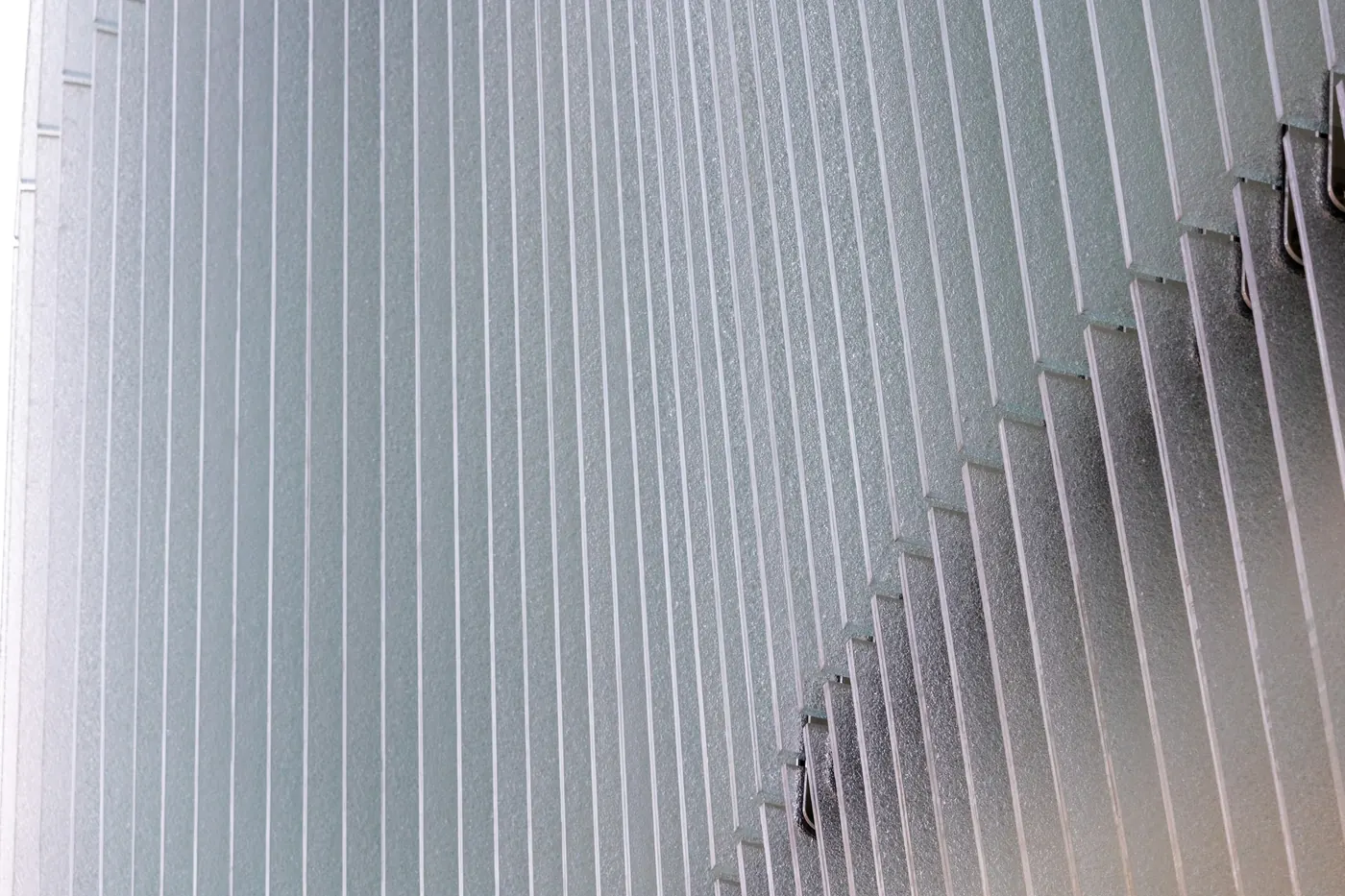
Fritted glass: printed patterns
Fritted glass carries a ceramic ink, usually printed by screen or digital printing, and fused onto the surface during heat treatment. The pattern can be dots, lines, gradients or images, in white, grey or colour. Its coverage decides how much it hides: a dense frit can be close to opaque, while an open pattern breaks up the view without blocking it.
Frit has other uses too. It can reduce solar gain and glare, and it is often used to hide floor slabs or services in spandrel areas. Because the frit is fired during toughening or heat strengthening, it is part of the glass rather than a coating that can peel. A gradient frit can give privacy at eye level and keep a clear view above, which is useful on low-level glazing or frameless glass doors.
Look at frit outside, at full scale. A pattern that looks fine on a sample can produce visible lines or a moire effect when two fritted panes overlap, or a different colour when seen against a dark interior. The mock-up review guide explains how to judge glass in real light.
Translucent laminated glass
Laminated glass bonds two or more panes with an interlayer. Interlayers are available in translucent and coloured versions, which scatter light in the same way as frosted glass but with the treatment sealed inside. Both outer faces stay smooth and easy to clean, and the pane keeps the safety behaviour of laminated glass if it breaks.
This makes translucent laminated glass a common choice where privacy and safety glazing are needed together, such as low-level panes, doors and balustrades. The laminated or toughened guide explains when lamination is required. Check that the interlayer is suitable for exposed edges, since some edges need protection from moisture.
Tinted and reflective glass
Tinted glass is coloured through its body, and reflective glass has a coating that reflects more light from one or both faces. In daylight, when the outside is much brighter than the inside, both reduce what people outside can see. Reflective glass can appear almost mirror-like from the street.
Neither is reliable privacy glass on its own. At night, or on a dull day with a brightly lit interior, the effect reverses and occupants can feel exposed. They also reduce daylight inside and can change how the interior looks. Reflective glass raises another question, glare toward neighbours and streets, covered in the glare guide. Use tint or reflection for solar control and appearance, and add a scattering layer or blinds where privacy matters after dark.
Switchable glass
Switchable glass changes from clear to translucent when its electrical supply is switched. The active layer is usually laminated inside the pane. It gives privacy on demand, such as in a meeting room or a bathroom that also has a view, and it can be combined with other treatments in a double-glazed unit.
It is also a facade component with wiring. Cables must pass through the frame without breaking the air and water seals, and a power supply and control must be coordinated with other trades. Ask about the state when power is off, available sizes, the appearance at the edges, how a failed pane is replaced and whether the product is suited to external exposure in the proposed position.
Heat, coatings and position in the unit
A privacy treatment changes how the glass behaves thermally. Dense frit, body tint and some interlayers absorb more solar energy, so the pane runs hotter in sun. That can matter for thermal stress, especially where a pane is partly shaded or partly fritted, and the supplier may require heat-strengthened or toughened glass to manage it. The glass thickness guide covers related decisions.
In a double-glazed unit, the treated surface has to be placed so that it does not interfere with a low-E coating or solar control coating, and so that it is protected where needed. Every surface is numbered from the outside, and the specification should say which surface carries each treatment. The insulated glass units guide explains the numbering.
Privacy without treating the glass
Sometimes the better answer sits outside the glass. Fixed fins, louvers and perforated screens can block oblique views from a neighbouring building or a street while keeping the glass clear, so occupants still see out. They also shade the glass, which can reduce the need for a dark tint. The perforated screens guide and the louvers guide explain how these elements work.
The choice depends on where the unwanted view comes from. A view from directly opposite is best handled at the glass. A view from an angle, such as from a neighbouring balcony, can often be cut by a vertical fin set at the right depth and spacing. A view from above, such as from a taller building, may call for a canopy or a fritted band at the top of the pane. Draw the sightlines on a section and a plan before deciding.
Internal blinds and curtains remain a valid layer. They give the occupant control, and they cover the night-time gap left by tinted and reflective glass. Their downside is that they depend on people using them and can trap heat against the glass if they are dark and close to it. Where blinds are part of the strategy, the facade designer and the architect should agree the gap and the colour with the glass supplier.
What to ask before ordering
- When is privacy needed: daytime only, after dark, or both?
- How much should be hidden: a blurred view, a band at eye level, or full obscurity?
- Which surface carries the treatment, and how will that face be cleaned?
- Does the treatment affect safety glazing, thermal stress or the coating choice?
- How will the glass look from outside next to clear panes on the same elevation?
- For switchable glass, how are wiring, control and replacement handled?
Privacy glass is often added late, when a room layout changes. It is easier, and usually cheaper, to agree it when the glass schedule is first prepared, so that the build-up, appearance and frame details are settled together. The choosing facade glass guide gives the wider context, and the curtain wall page shows where these panes usually sit.
General guidance for orientation, not a specification. Applicable standards, values and details are confirmed per project with the facade consultant.