Ask a specifier to choose between laminated and toughened glass, and the answer is often that it depends. That is accurate, and also unhelpful. The two types do different jobs, and a clear way of thinking about them makes the decision easier. This article looks at how each type is made, how each breaks, and the questions that point to the right one for a particular place on a building.
How each type is made
Toughened glass starts as an ordinary sheet that is cut, drilled and finished to its final size. It is then heated and cooled rapidly, which puts the surfaces into compression and the core into tension. The result is a pane that resists stress much better than untreated glass of the same thickness.
Laminated glass is made differently. Two or more layers of glass are bonded together with an interlayer, using heat and pressure, so that they behave as one pane. The interlayer is tough and sticky, and it is what holds the pane together when the glass cracks. The layers themselves may be ordinary, heat-strengthened or toughened glass.
How each one breaks
Toughened glass stores energy in its stressed state, so when it breaks it does so completely, falling apart into many small, blunt pieces. That makes it much less likely to cause deep cuts than ordinary glass. But the pane is gone, and the pieces fall. Where the glass is above head height, that is a hazard in itself.
Laminated glass cracks, often in a web pattern, but the pieces stay stuck to the interlayer. The pane usually stays in its frame, at least for a time, and provides some protection until it is replaced. It is not unbreakable, and a badly damaged laminated pane can sag, but it behaves very differently from a toughened one at the moment of failure.
Strength is not the whole story
Toughened glass is strong, and that can make it look like the safer option. But strength only reduces the chance of breakage. It does not control what happens when breakage occurs. A very strong pane that falls from a height may be more dangerous than a weaker one that stays up. The question to ask is not only how likely the glass is to break but what the consequence is if it does.
Laminated glass has its own limits. Because it is made of layers, its strength depends on the layers and on the interlayer, and the interlayer can soften as it warms. For many facade uses this is accounted for in the design, and it is the reason the build-up should be confirmed by the engineer. Neither type is a substitute for a calculation.
Laminated glass offers other benefits that have nothing to do with breakage. The interlayer reduces the passage of sound, so a laminated pane is often chosen where traffic or aircraft noise is a concern. It also blocks a good share of ultraviolet light, and it resists attempts at forced entry better than a single pane because the interlayer holds the glass in place even when the surface is damaged.
Toughened glass has its own advantages. It is usually cheaper, lighter and quicker to obtain for a given size, and it is clear and easy to work with. It also withstands thermal stress better than ordinary glass, which is useful where sun heats part of a pane. For ordinary vision glass in a location with no overhead or barrier risk, it is often the sensible and economical choice.
Where each type is usually found
In a curtain wall, vision glass is commonly part of a double-glazed unit made of toughened or heat-strengthened panes, and the inner or outer pane may be laminated where the location calls for it. Overhead locations such as canopies and skylights normally use laminated glass on the lower side. Areas near the ground, where people may strike the glass, often follow safety glazing rules in the code.
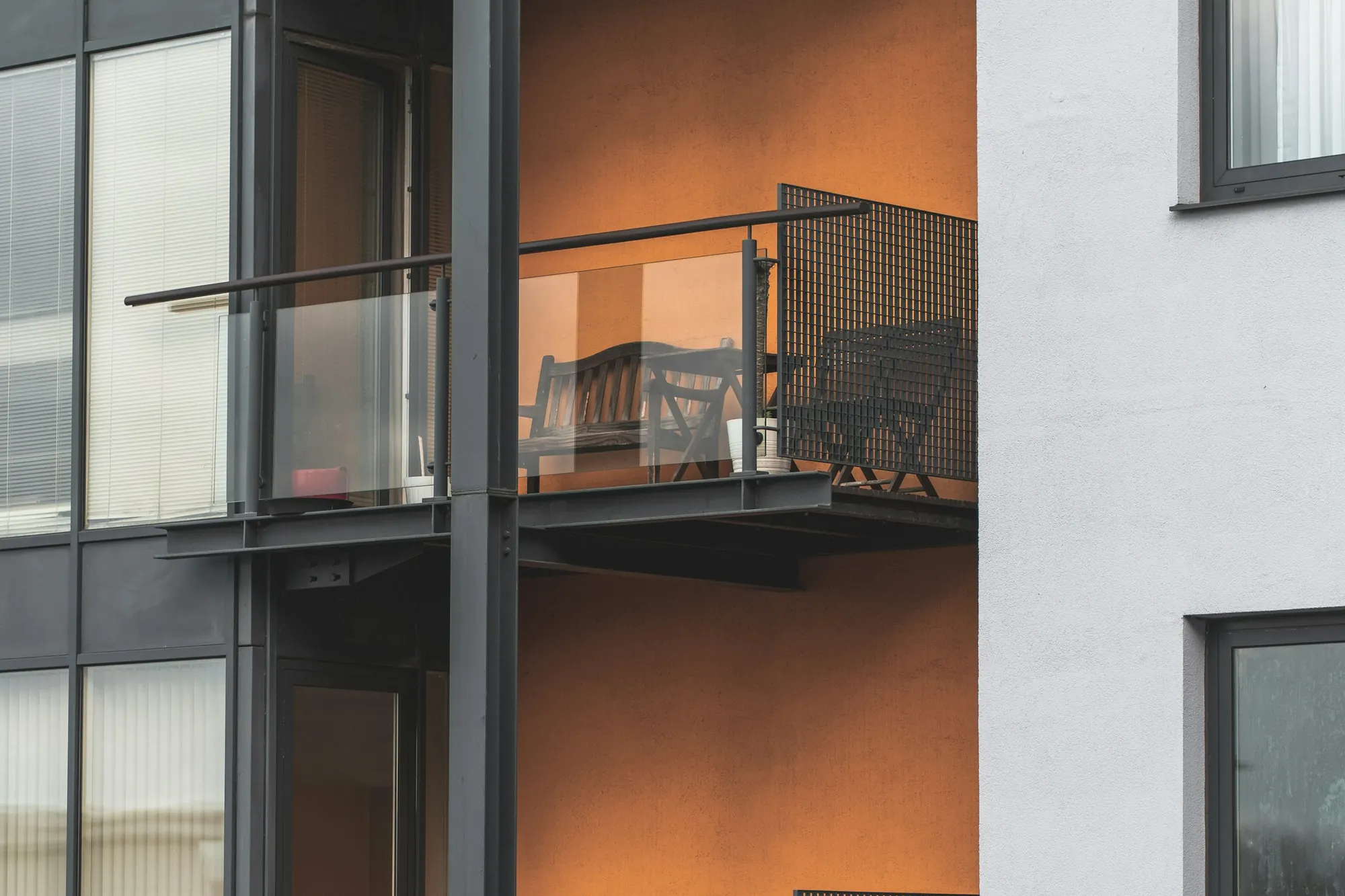
For railings and balustrades, laminated glass is widely used because the pane has to retain its position after breakage and keep people from falling. Often the layers are themselves toughened. The balustrade guide goes into this in more detail. The point to note here is that the same building can use both types, for different reasons.
The questions that decide it
- What is underneath the glass, and who could be hurt if it falls?
- Is the glass overhead, at a height, or at ground level?
- Does the code require safety glazing at this location?
- Is it a barrier that must keep people in place after a break?
- Is there a security, noise or blast concern that points to laminated glass?
- How is the pane supported, and does the support suit a heavier laminated build-up?
Often the answer is both. A laminated pane made from toughened layers combines strength with retention, at the cost of weight and price. The facade consultant weighs these against the code and the use, and the result should be written into the specification for each location, not decided on site.
A practical way to record the decision is a simple schedule. List each location on the building, such as ground-level vision glass, upper floors, canopy, balustrade and entrance, and write the chosen glass type beside it, with the reason. This makes the logic visible to the architect, the consultant and the installer, and it helps when a question comes up later about why one pane differs from its neighbour.
Appearance is worth a thought too. Laminated glass has a very slight tint or haze from the interlayer, and edges may show a line. Toughened glass can show faint marks from the heat treatment process, visible in some light or through some coatings. Neither is a defect, but both are easier to accept if the expected look is agreed on a large sample before the order is placed.
Weight, cost and handling
Laminated glass, particularly in several layers, is heavier than a single toughened pane, and that affects the frame, the anchors and the handling. It also usually costs more to produce. These are not reasons to avoid it where it is needed, but they should be known early so that the frame is designed for the weight.
- Toughened glass must be cut, drilled and edged before treatment; later changes are not possible.
- Laminated glass is made to size as well, and its edges need protection from moisture.
- Both types have long lead times in large sizes, so order dates matter.
- Replacement panes must match the original build-up, and spares should be planned.
Edges, damage and spontaneous breakage
Glass edges are the most vulnerable part, and damage at the edge can start a break later. Toughened glass is particularly sensitive, because a chip that reaches the stressed core can shatter the whole pane. Careful handling, edge protection and clean installation reduce the risk. Laminated glass edges can also suffer if left exposed to water or certain chemicals, which can affect the interlayer.
Toughened glass can, rarely, break without any outside cause because of a tiny impurity in the glass. A process called heat-soak testing, sometimes specified, reduces this risk before the glass leaves the factory. If it matters on your project, ask whether heat-soak testing is included and how it is recorded. See choosing facade glass for the wider picture.
Replacement and the long view
A facade has to be maintained for decades, and a broken pane will need to be replaced. Think now about how a new pane would reach its position. A large heavy laminated unit may need special equipment and access, and lead times can be long. Keeping a record of the exact specification of every glazing type used makes ordering a match much easier later.
A mock-up is a good place to see the glass in its frame and to discuss replacement with the installer. It also gives a chance to look at the edges and the appearance of the actual build-up, which is hard to judge from a small sample.
General guidance for orientation, not a specification. Applicable standards, values and details are confirmed per project with the facade consultant.